This article may contain affiliate links.
Actualizado: 30 March, 2026
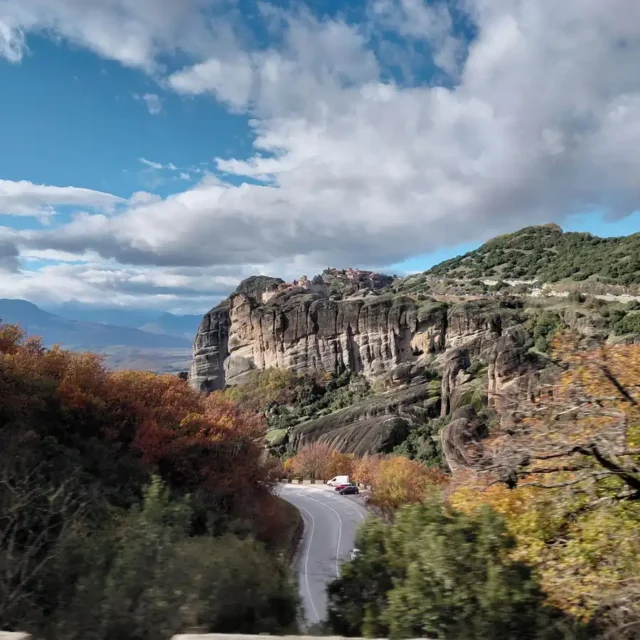
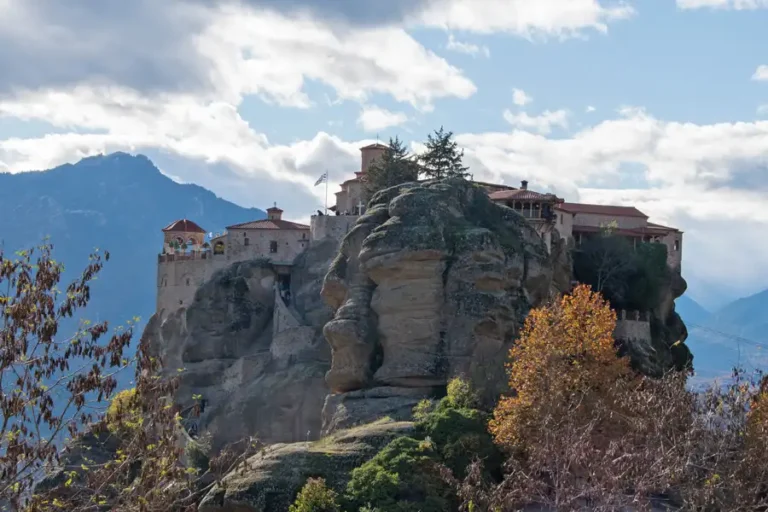
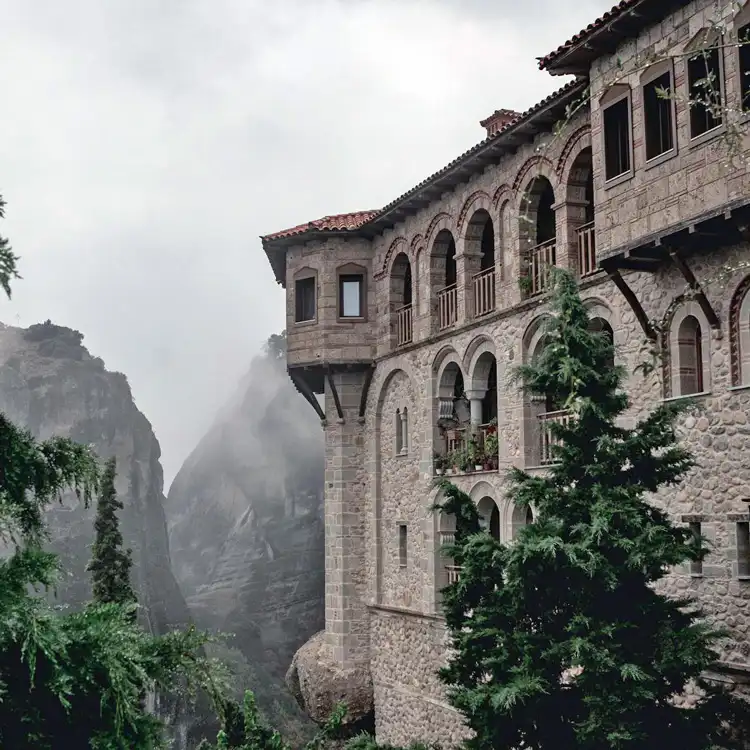
Getting around Meteora isn’t just about going from one monastery to another. It’s about driving or walking between towering rock walls, scenic curves, and viewpoints you simply have to stop at.
The good news is that the distances aren’t huge. The not-so-good news is that the terrain has some serious elevation changes and public transport is limited. Choosing the right option will make a big difference during your visit.
In this guide, I’ll walk you through all the ways to get around Meteora. That way, you can choose the one that best fits your trip and enjoy this unique landscape in Greece.
How to get around Meteora
1. Car
If I had to recommend just one way to get around Meteora, it would be by car. It’s the most practical and comfortable option for visiting the monasteries. Even though the distances aren’t very long, the hills and the summer heat are no joke.
Plus, it gives you the freedom to plan your route at your own pace, start early to avoid tour groups, and even head to a viewpoint at sunrise or sunset.
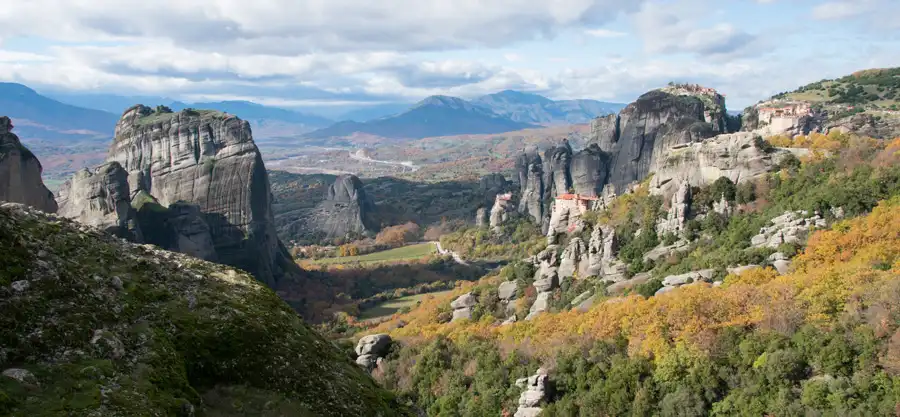
As for the road connecting the monasteries, it’s in good condition and well signposted. There are curves and slopes, yes, but nothing too challenging.
All the monasteries have free parking nearby. However, in high season the parking areas can start filling up from mid-morning.
Another small detail to keep in mind: there are gas stations in the towns, but none in the monastery area.
🔹 Where to rent
The best option is to rent a car in Athens or Thessaloniki and drive to the area. That way, you can also take advantage of the trip to visit other places along the way. Prices are also much cheaper than renting directly in Meteora.
I recommend this website, which usually has very good car rental deals in Greece. To give you an idea, I once rented a car in Athens for 3 days for less than 9 euros in total. In high season, expect to pay more — maybe around 70 to 80 euros for 3 days.
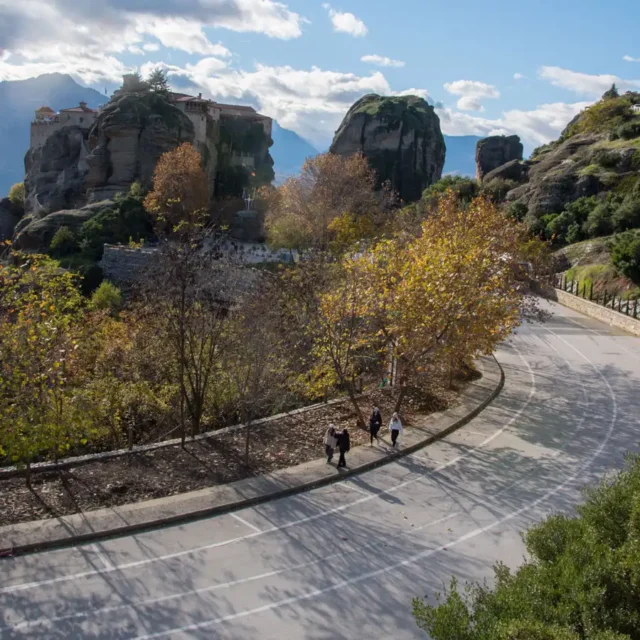
If you prefer to reach Meteora by public transport, there are small local agencies in Kalambaka, but availability is more limited, especially in high season. If you’re traveling in summer, it’s best to book in advance. Prices usually start at around 45 euros per day.
Keep in mind that if you’re traveling from outside the European Union, you’ll need an international driving permit, which you arrange in your home country before traveling. If your license is from an EU country, you can simply use your national one.
⭐ Related article: 10 Best Day Trips from Athens
2. Bus
I’m going to be honest with you here: getting around Meteora by bus isn’t the best option. Schedules are very limited. In low season, there are usually about 2 buses per day, and from May to September the frequency increases a bit to around 3 or 4 buses daily.
Even then, it’s not fixed. They sometimes adjust the frequency depending on the number of tourists — in other words, it’s a bit of a lottery. 😅 That’s why it’s not really worth publishing the schedules here. To check them, just go to the KTEL office in Kalambaka (it’s marked on the map at the end of the article).
So getting around Meteora by bus can work well if you’re planning to spend at least one night there and have time to explore at a relaxed pace while working around the bus schedules. Or if you plan to combine the bus with some walking.
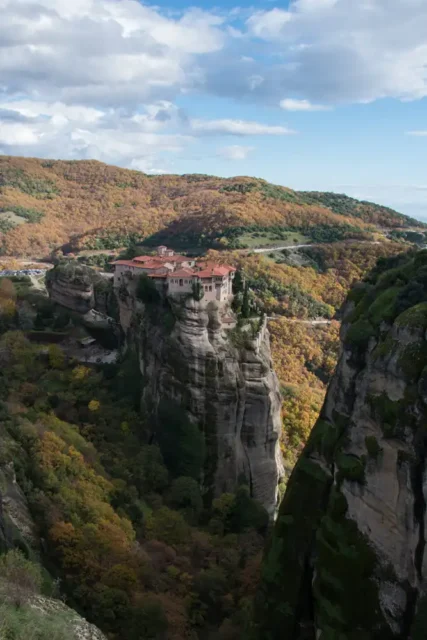
✔️ Practical Info:
- Stops: Kalambaka bus station (next to the KTEL office) – Hotel Divani – Town Hall Square – Camping Vrachos – Kastraki – Camping The Cave – Meteora monasteries: St. Nikolaos Anapafsas – Roussanou – Varlaam – Great Meteoro – Holy Trinity – St. Stephen’s (the bus stops at each of them).
- Tickets: They cost €1.60 and can be bought at the KTEL office or directly on the bus.
🤑 If you want to save on your next adventure, use this link from Booking to get 15% off your stay.
3. On foot
Exploring Meteora on foot can be a fantastic experience. You’re not just visiting monasteries — you’re walking among giant stone pillars, passing through forests, natural viewpoints, and ancient paths that monks used centuries ago.
✔️ Practical information:
- Distance: the distances themselves aren’t huge. To visit several monasteries in one day, you could easily walk between 6 and 12 km. On top of that, you’ll need to factor in all the ups and downs.
- Difficulty level: moderate, it becomes more challenging in summer, when the heat can be quite intense and some sections have little or no shade.
- Trailsto make the route more manageable, you can connect some monasteries using hiking trails. On Wikiloc you’ll find several routes, ranging from easy to moderate.
- Hiking group: if you’d rather do it with a guided group, I can recommend this one that includes a visit to a monastery.
- Best time: if you have flexibility with your dates, spring and autumn are ideal for hiking in Meteora.
- What to pack: plenty of water, something to eat, sun protection, a hat, and shoes with good grip.
4. Motorcycle
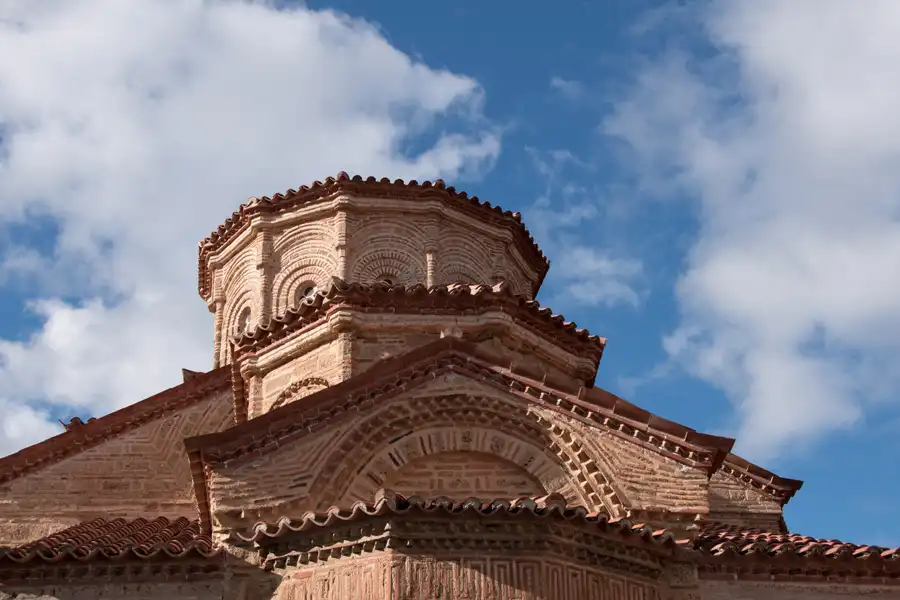
Not many people mention getting around Meteora by motorcycle, but I actually think it’s one of the best options. It gives you the freedom to move at your own pace and makes it easier to park or stop for photos along the way.
That said, prices aren’t exactly cheap compared with renting a car in Athens. The average price for renting a scooter is around 25 euros per day, and up to about 50 euros for larger motorcycles.
The road is in good condition. There are plenty of curves, but nothing too complicated.
🔹 Where to rent
Both in Kalambaka and Kastraki you’ll find several motorcycle rental places. If you’re visiting Meteora in summer, I recommend booking in advance.
To ride a motorcycle in Greece, you need a specific motorcycle license. A standard category B car license is not enough — it has to be A, A1, etc., depending on the bike. And if you’re traveling from outside the EU, you’ll also need an international motorcycle permit arranged in your home country before traveling.
✅ Friendly Tip: Don’t forget to get travel insurance for your next adventure. I recommend Heymondo,—it’s super comprehensive, and with that link, you’ll get 5% off.
5. Electric bicycle
Electric bikes are becoming an increasingly popular alternative. They give you the freedom to explore on your own, with a little extra help on the climbs — and there are quite a few. It’s an active, sustainable, and pretty fun way to get around the monasteries.
Even though it’s not as demanding as walking the whole route, you still need to be in decent shape. Also, since the terrain is mountainous, it’s best if you have some experience riding on roads and handling long climbs.
🔹 Where to rent
In Kalambaka and Kastraki there are several local companies that rent electric bikes, with prices starting at around 20 euros per day. In high season, it’s best to book ahead.
👍 My two cents: If you want to stay connected in Greece, 🤳 I recommend this eSIM for Greece. Click on that links for a 5% discount.
6. Taxi
A taxi is another option that can work well if you’re traveling with more people and no one feels like driving, but it can get expensive.
To give you an idea, a simple ride between Kalambaka and one of the monasteries can cost around 10 to 15 euros. If you arrange with the driver to wait while you visit the monastery and then take you to another spot, the price will be higher. Typically, they charge around 30 euros per hour.
You should also keep in mind that if you arrive at a monastery by taxi, you won’t find taxis waiting outside when you leave — there are no taxi stops there. So it’s best to arrange the whole trip in advance. 🚕
7. Tours
Tours are one of the most comfortable ways to get around Meteora, especially if you don’t want to drive. Plus, they’ll usually cost much less than taking a taxi.
✔️ Here are some of the best options:
- Half-day tour: this is the most practical way to see the must-see spots without overcomplicating things. I recommend this tour — it’s very complete, affordable, and runs with a small group. It includes pickup in Kalambaka or Kastraki and stops at all the monasteries and viewpoints. Another nice bonus is that it offers an audio guide in several languages (Spanish, English, French, etc.). You can check the details and book on this website.
- Sunset tour: if you have flexible timing, the afternoon tour is the best option and perfect for sunset photos. It’s also affordable and runs with a small group. Here you can check the details and book.
- Tour with a Spanish-speaking guide (and other Latin languages): this one is well priced.
- Private tourAnother good option is this one tour privado. Es una opción más personalizada con precio grupal con precios grupales que te vendrán bien si viajas con más gente.
Map
FAQs
No, there’s no Uber service in the area. If you need private transport, you’ll have to use local taxis or book a tour.
It depends on your pace and how many monasteries you want to visit.
In half a day, you can visit two or three monasteries if you move quickly and travel by car. If you’d rather take it easy, the ideal plan is to dedicate a full day.
To visit all six monasteries or to include some hiking, two or three days can be perfect.
Final Thoughts
These are the main ways to get around Meteora. I hope you find the one that suits you best so you can fully enjoy what might just be the most beautiful place in mainland Greece.
I’ll leave you with this quote, which feels perfect for a place as special as Meteora:
"There are places where you stay, and places that stay with you."
If you have any questions, leave me a comment below and I'll help you as much as I can. If you found the article useful, share it with other travelers. Have a good trip! 😘
More about Greece

Hi, I’m Andrea, creator and author of Viajeros Activos (Active Travelers). I write about Southeast Asia, the Caucasus, and Europe. I’m a full-time traveler, passionate about good food, and always looking for new adventures.