This article may contain affiliate links.
Updated: August 28, 2026
The Acropolis is one of Athens must-sees. Walking through this historic site and admiring the Parthenon, one of the most famous monuments in the world, is something you’ll remember for a long time.
However, your visit can be much more enjoyable if you plan ahead. The intense summer heat, crowds, uneven ground, or choosing the wrong time of day can make the experience more uncomfortable than expected.
In this guide, I share my best practical tips for visiting the Acropolis of Athens, from when to go and what to bring to the small details that can make a difference, all based on my experience of visiting several times during the years I’ve been living in Greece.
📶 eSIM to stay connected from the moment you land — 5% off
🏨 Accommodation with great deals
🛡️ Travel insurance with up to 15% off
🚗 Car rental at the best price
Tips for Visiting the Acropolis
1. Buy Your Ticket in Advance
🔹 High Season
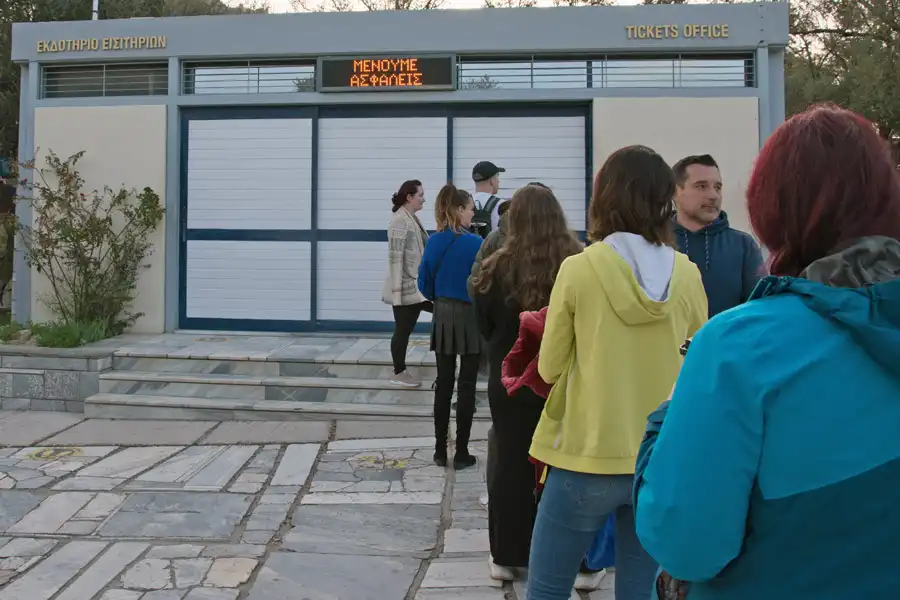
During high season, especially between April and October, the queues at the ticket office can easily be half an hour long or more, particularly if several cruise ships arrive at the port of Piraeus at the same time.
That’s why buying your ticket online in advance allows you to skip that wait. You’ll still have to queue to enter the site, though—there’s no getting around that.
🔹 Booking tips
- Book at least two or three days in advance during high season if you’re flexible about the time. However, if you prefer to go first thing in the morning, you’ll need to book at least a month in advance.
- Buy your ticket from the official website or book this guided tour, which is well worth it.
- Save your ticket on your phone, but also take a screenshot in case you have connection problems at the entrance.
💡 If I could give you just one tip for visiting the Acropolis, it would be this: book the earliest time slot available. You’ll enjoy much more pleasant temperatures, there will be far fewer people, and you’ll also have the best light for taking photos.

2. Choose the Right Time of Day
The time you enter can completely change your experience. The Acropolis receives the highest number of visitors between 10 a.m. and 1 p.m., when organised tour groups and cruise passengers arrive. If you can avoid this time slot, you’ll definitely notice the difference.

The first thing in the morning, right when it opens, is when you’ll find the fewest visitors. You’ll be able to explore the main monuments much more peacefully and take photos without constantly having to wait for people to move out of the way. The light is also perfect for photographing the Parthenon.
Another great option that few people know about is the last two hours before closing: there are fewer crowds, and the afternoon light gives the marble a golden tone that looks spectacular in photos.
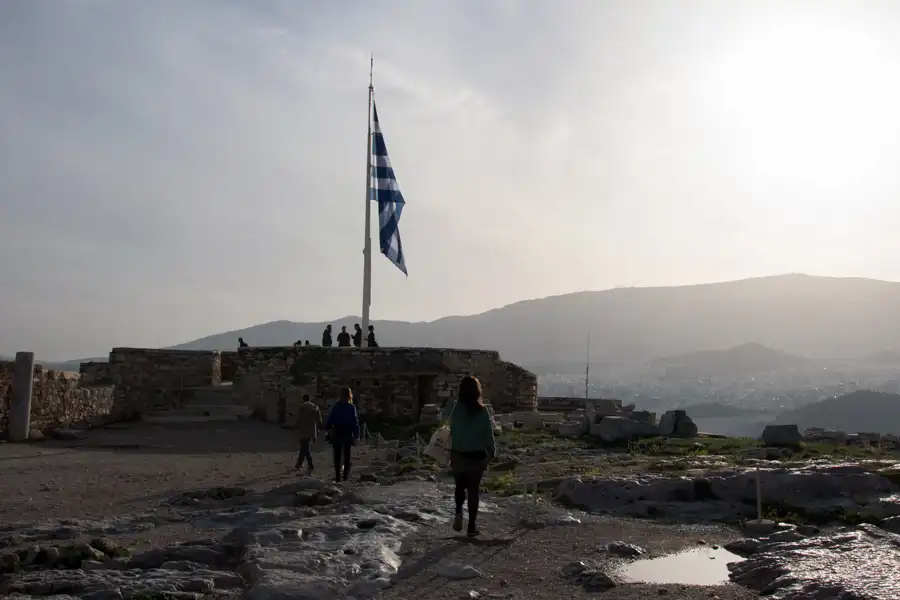
✔️ In short:
- First hour after opening: fewer crowds, less heat, good light.
- Last hour before closing: fewer crowds, warm light, cooler temperatures.
- 10:00 a.m. to 1:00 p.m: the time slot to avoid if you want to enjoy your visit at ease.
3. Consider the Time of Year
The time of year you travel is just as important as the time of day. Each season has its own balance between weather and visitor numbers.
🔹 Spring and Autumn
Spring (March to May) and autumn (September to October) are usually the best times to visit the Acropolis of Athens: temperatures are pleasant, there are fewer tourists than in the middle of summer, and the landscape around the hill is greener, especially in spring.

🔹 Summer
Between June and August, you’ll find the highest number of visitors and the hottest temperatures of the year.
During heat waves, which aren't unusual in Athens, the Ministry of Culture may adjust opening hours or temporarily close the Acropolis during the hottest part of the day to protect both visitors and staff.
If you're traveling in summer, I'd suggest not leaving the Acropolis for the last day of your trip. That way you'll have room to reschedule if extreme temperatures or a closure are in the forecast.
🔹 Winter
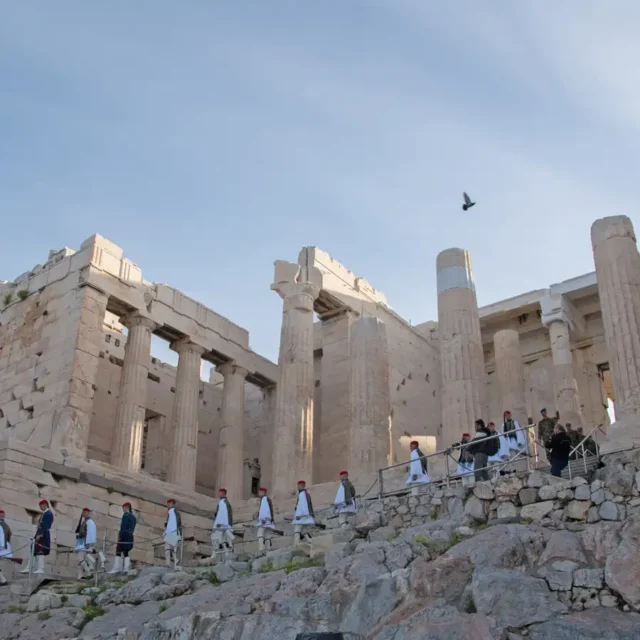
Winter, from November to February, offers the advantage of far fewer visitors and virtually non-existent queues, although the days are shorter and closing time is considerably earlier, so it’s worth planning your visit carefully.
Also, if you go first thing on a Sunday, you may see the Evzones leave after raising the Greek flag—something I was lucky enough to see myself.

4. Wear Comfortable Shoes with Good Grip
One of the details that tends to catch tourists off guard when visiting the Acropolis is the state of the ground. While some areas have proper paths, much of the walk is over ancient stones and marble surfaces that can get pretty slippery, especially where they've been polished smooth by millions of visitors over the years. And it gets even worse when it rains a bit, which happens fairly often in fall and winter.

For this reason, avoid wearing flip-flops or any footwear with smooth soles. You’ll need comfortable shoes with some grip that hold your foot securely, as you’ll be going up and down slopes and walking over uneven surfaces throughout your visit.
5. What to Pack
Most of the visit takes place outdoors and there is very little shade, so it’s best to come prepared, especially if you visit the Acropolis in summer.

✔️ Before heading in, make sure you bring:
- Water (essential in summer).
- Sunscreen.
- Sunglasses.
- A cap or hat.
❌ Avoid bringing:
- Food, as it is not allowed inside the site.
- Professional photography or filming equipment if you do not have authorisation. I entered with my DSLR camera and had no problems, but avoid accessories such as tripods.
💡 My two cents: buy your water before heading up. There's nowhere to buy anything once you're inside the site. The only café is right across from the ticket booths at the main entrance, and the prices are pretty steep — last time I paid €6 for a small bottle of water.
6. Bring a Light Backpack
You don’t need to carry much to enjoy your visit. In fact, the lighter you travel, the more comfortably you’ll be able to move around areas with steps and slopes.
A small backpack with water, sun protection, your phone or camera, and not much else is all you need.
Keep in mind that there are size restrictions for large backpacks, and there is no luggage storage inside the site. So if you’re heading straight there with a suitcase from a flight or transfer, it’s better to leave it at your hotel or in a luggage storage facility in the city before heading up.
7. Give the Visit Enough Time
Although many people think that visiting the Acropolis of Athens simply means walking up to the Parthenon, the site has several important monuments and is well worth exploring without rushing.
For a relaxed visit, allow approximately 1.5 to 2 hours. This will give you enough time to see the main points of interest, enjoy the views over Athens and take photos without having to rush from one place to another.

If you’re passionate about history, architecture or photography, you may need more time.
Also, remember to allow time to get to the entrance, go through the security checks and walk up to the main area. Don’t plan your visit too tightly if you have another activity booked afterwards.
The Acropolis is a place to explore without rushing: part of the experience lies in walking through this historic site, taking in the details and enjoying the views over Athens.

8. Don't Just Focus on the Parthenon
The Parthenon is the star of the Acropolis of Athens, but don’t miss the other equally fascinating monuments within the same site.
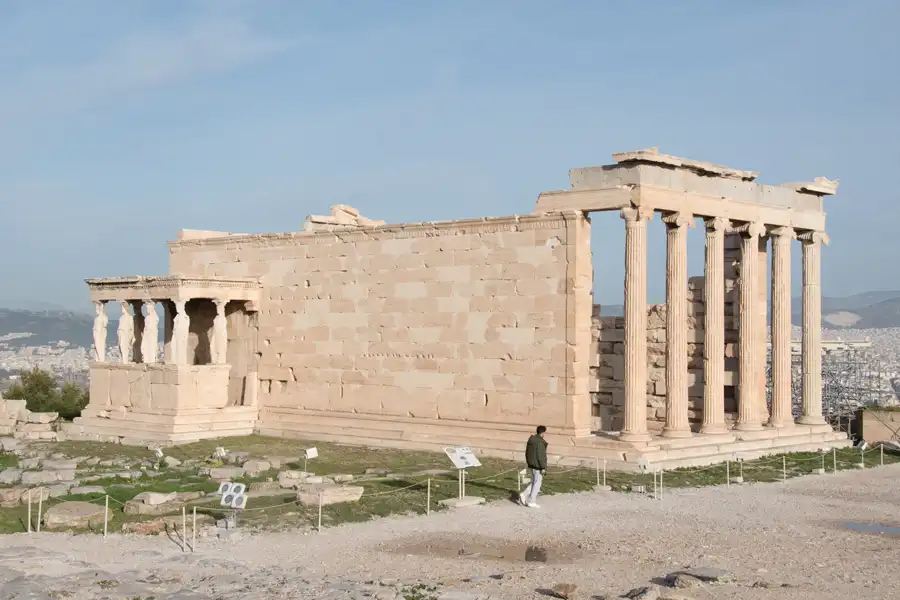
It’s worth taking your time to see:
- The Erechtheion, with its famous Porch of the Caryatids, the six columns shaped like women that support the roof.
- The Temple of Athena Nike, small but very well preserved, located next to the main entrance.
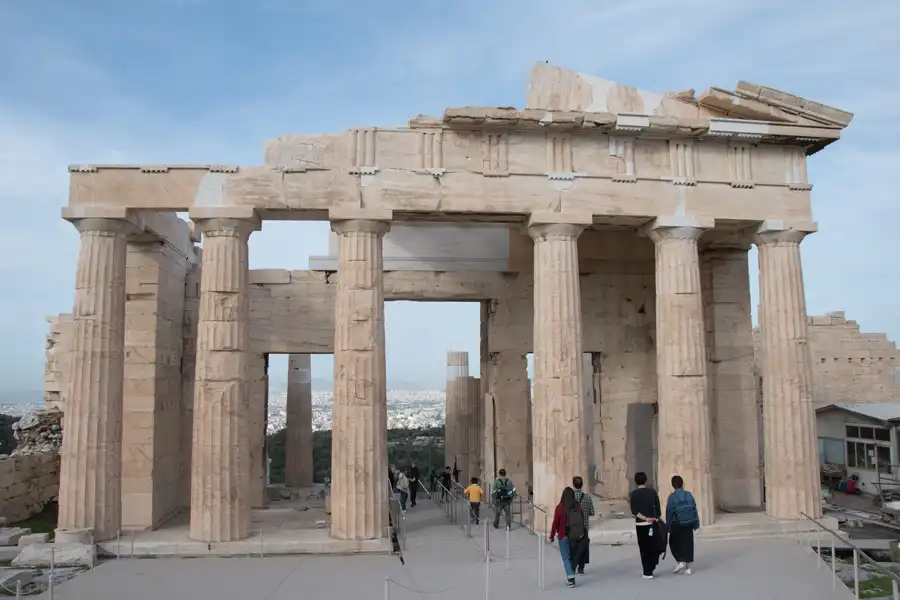
- The Propylaea, the monumental gateway whose sheer scale already gives you a sense of the grandeur of the rest of the site.
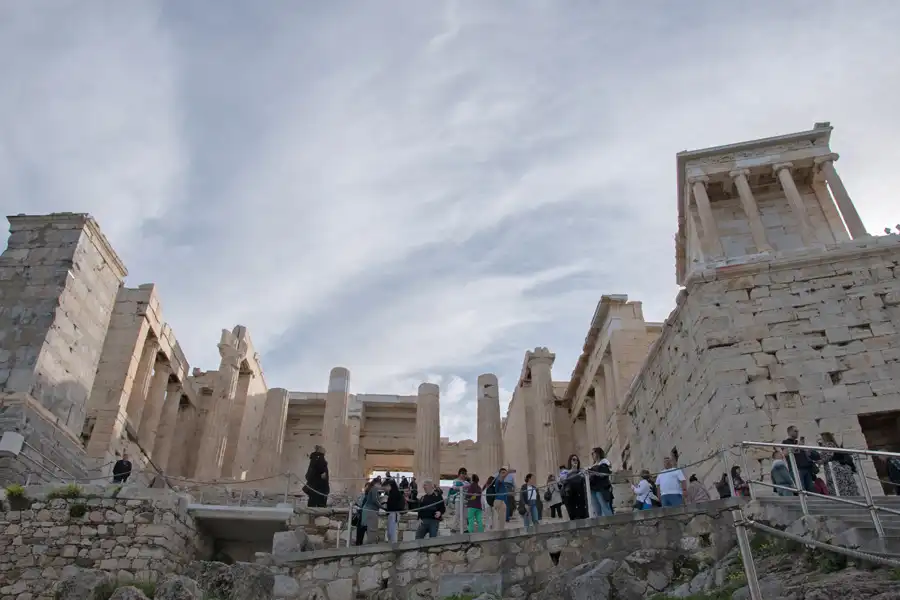
9. Be Prepared to Walk on Uneven Ground
In addition to the slippery marble I mentioned earlier, the route includes sections with worn steps, steep slopes and ancient stones that are not always level. This is not a flat or particularly accessible walk, so it’s best to take your time and pay attention to where you’re stepping, especially if you’re carrying a camera or backpack.
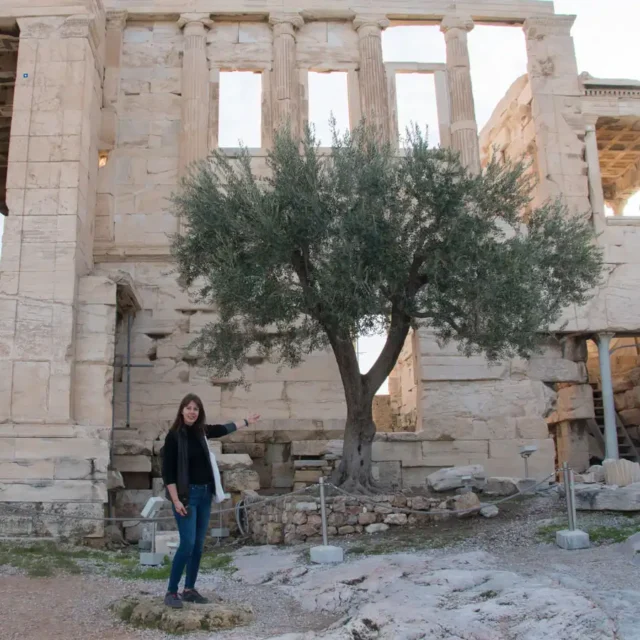
If you’re travelling with young children, older people or someone with reduced mobility, keep in mind that reaching the upper part of the site requires walking up quite a steep incline, with no alternative transport available inside the site.
10. Tips for Taking Good Photos at the Acropolis
If you enjoy photography, light is your best ally here. Early in the morning, the sunlight from the side highlights the details of the columns and avoids the harsh shadows of midday. The last hour of the afternoon will give you a similar effect, with warmer tones on the marble.

Some great spots for photographing both the Parthenon and the Athens skyline include:
- The area next to the Temple of Athena Nike, with the Parthenon in the background.
- The viewpoint near the Erechtheion, has a great perspective of the city.
- Areopagus Hill, just outside the site, which is perfect for a wide shot of the entire Acropolis from the outside.
Be patient: during the busiest hours it's tough to get a shot without people in it, so if you want a clear photo, it's worth waiting a few minutes or coming back at a quieter time.
Practical Information for Visiting the Acropolis
Here’s everything you need to know to organise your visit.
1. Opening Hours & Ticket Prices
The Acropolis opens every day at 8:00 a.m. Closing time varies depending on the time of year: 8:00 p.m. in high season and 5:00 p.m. in low season, although the schedule changes gradually throughout the year.
The standard admission fee is €30; certain groups are eligible for a reduced €15 ticket or free admission. There are also several days each year when admission is free for everyone.
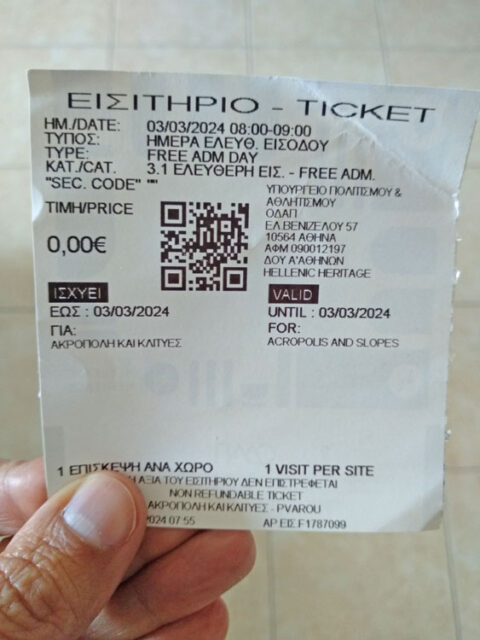
As of April 2025, the combined ticket that used to let you visit the Acropolis along with other archaeological sites in Athens at a reduced price no longer exists. Tickets are now purchased separately.
⭐ Related article: Free Museum Entry Days in Athens and Greece
2. How to Get to the Acropolis
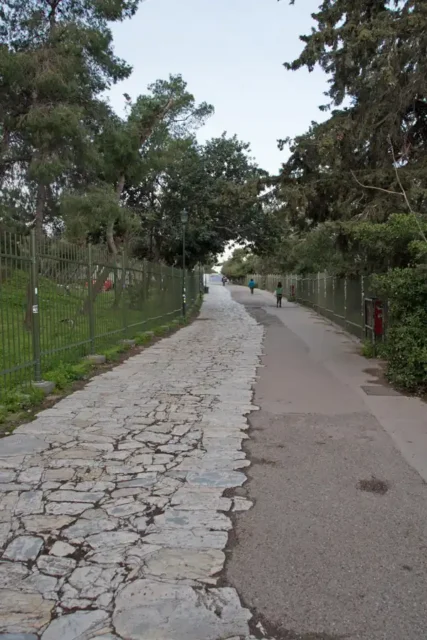
The Acropolis has two entrances: the main entrance to the west, next to the Propylaea, and a secondary entrance to the south, near the Odeon of Herodes Atticus.
The main entrance usually has more visitors and more ticket windows. The southern entrance is still largely unknown to most tourists and, although it only has one ticket window, it’s perfect for avoiding the crowds. That said, you’ll have to walk a little further from the street to reach the archaeological site.
By metro, there are three nearby stations:
- Acropoli (Line 2), the closest, about a 10–15-minute walk away.
- Monastiraki (Lines 1 and 3), about a 10-minute walk away.
- Thissio (Line 1), about a 15-minute walk away.
In all cases, the final stretch involves walking along streets with some uphill sections.
FAQs
1. Are there toilets at the Acropolis?
Yes, there are public toilets inside the site, near the main entrance and at another point along the route. There aren’t many, so during the busiest hours, you may have to wait
2. Can I bring in food or drinks inside?
You can bring water and, in fact, it’s recommended, especially in summer.
As for food and other drinks, you are not allowed to bring them into the archaeological site. If you have something in your backpack, it may be taken from you during the security check, but you can collect it when you leave.
That happened to me once: I'd forgotten I had some food in my backpack, and I goi it back without any issue when I finished the visit.

3. Is the Acropolis suitable for kids?
Yes. In general, it’s a suitable visit for children as long as they can walk for a while and manage some uphill sections and stairs.
If you’re travelling with a baby stroller, keep in mind that some areas can be difficult to navigate because of the uneven ground.
4. Is the Acropolis accessible?
Yes, but with limitations.
There is a lift at the main entrance of the Acropolis for people with disabilities or reduced mobility.
Once inside, there is a short accessible route, although not all areas of the archaeological site are adapted because of the nature of the terrain and the historic value of the site.

5. Is the guided tour worth it?
It depends on what you’re looking for. It’s not essential, but a guide will give you information and interesting facts that you won’t find on the information panels around the site, helping you understand the historical context of what you’re seeing much better.
Also, this guided tour is the one I took, and I was very happy with it; the guide explained everything in a very engaging way.
Final Thoughts
I hope these tips for visiting the Acropolis of Athens help you enjoy one of the most impressive places in Greece even more.
With a little planning, you can avoid the hottest hours, queues and other minor inconveniences, allowing you to focus on what really matters: enjoying a site with more than 2,500 years of history.
I’ll leave you with a quote:
“Every stone has a story to tell.”
If you have any questions, leave me a comment below and I'll help you as much as I can. If you found the article useful, share it with other travelers. Have a good trip! 😘
More about Athens


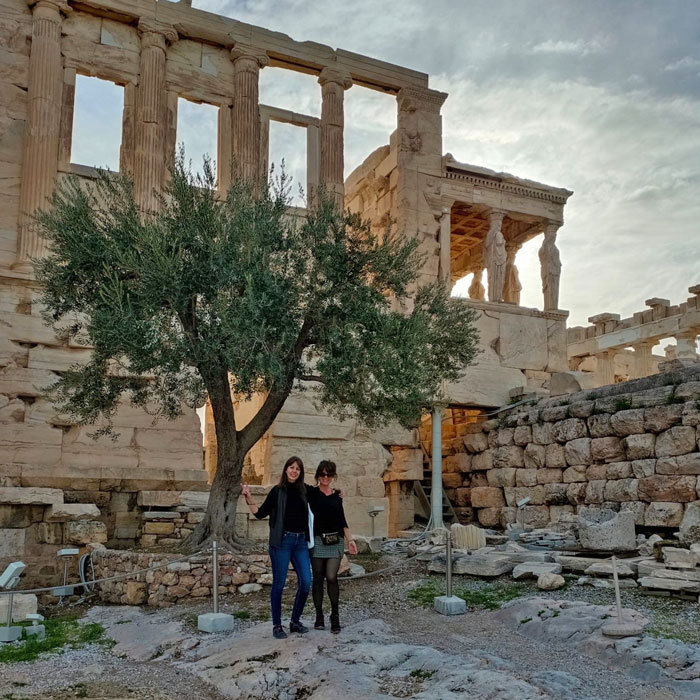




Hi, I’m Andrea, creator and author of Viajeros Activos (Active Travelers). I write about Southeast Asia, the Caucasus, and Europe. I’m a full-time traveler, passionate about good food, and always looking for new adventures.