This article may contain affiliate links.
Actualizado: 29 March, 2026
Meteora is one of the most impressive day trips in Greece. From Athens, it’s quite a long journey, but it’s well connected and there are several options depending on your budget, time, and preferences.
In this guide, I share all the ways to get to Meteora from Athens, including travel time, cost, and plenty of tips.
If you don’t have time to read everything, here’s a quick summary with links to check details and book:
- Train: best if you want to travel on your own without driving.
- Driving: the most flexible option, and depending on the season, the cheapest. In my opinion, the best choice.
- Day-trip: the most convenient if you only have one day, with a guide included, and depending on the season, it can even be cheaper than public transport.
Where Meteora is and distance from Athens
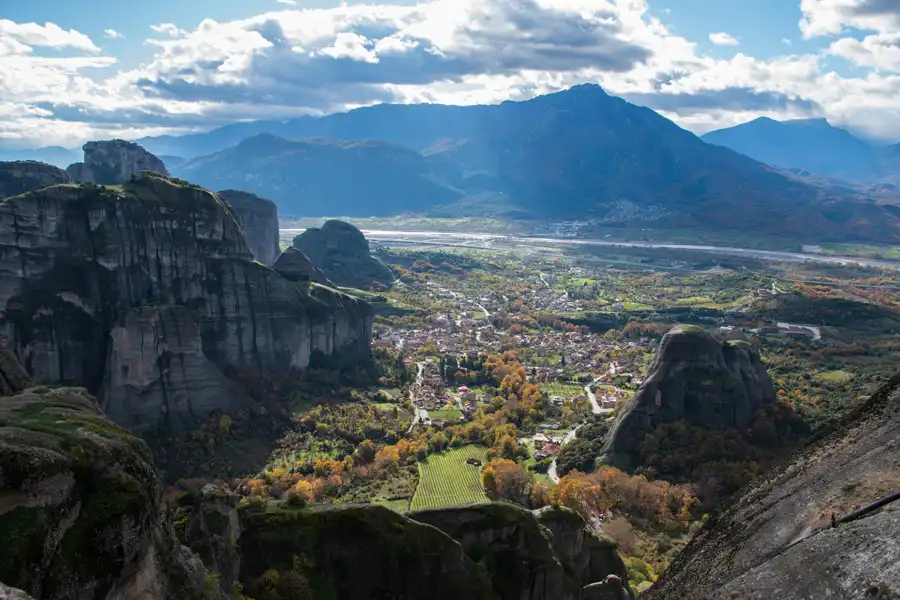
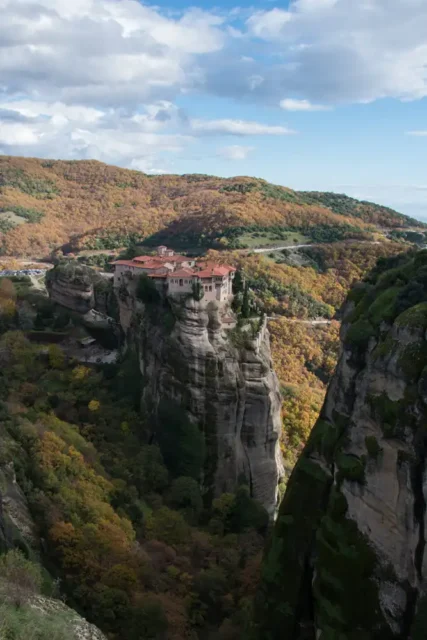
Meteora is located in central-northern Greece, in the region of Thessaly. Although many people say “go to Meteora,” the actual place you’ll arrive at is Kalambaka; it’s the main town next to the rock formations.
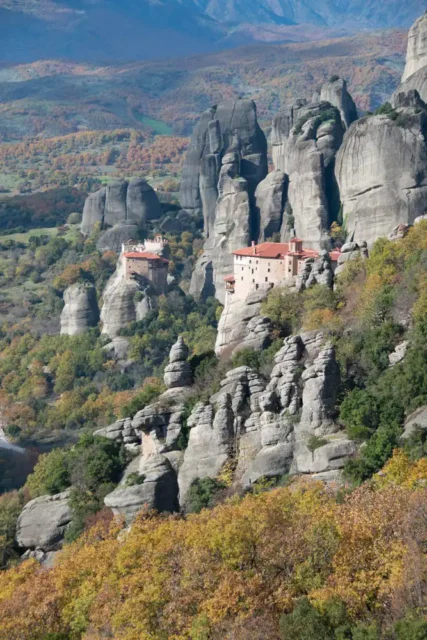
The distance from Athens is about 350 kilometers.
To give you an idea, here’s the average travel time:
- Car: between 3.5 and 4 hours
- Train: at least 5 hours
- Bus: almost 6 hours
How to Get to Meteora
1. Train
The train is the most popular public transport option to get from Athens to Kalambaka. It’s comfortable, fairly affordable, and you don’t have to deal with driving.
This option is ideal if you’re planning to spend a night or two in Meteora.
- Departure: trains leave from Larissa Station in Athens, right next to the metro stop with the same name. All stations are marked on the map above.
- Transfer: there used to be a direct train to Kalambaka, but in recent years, due to track issues, you now need to switch to a bus in Paleofarsalos. Don’t worry—the change is easy and well signposted. It’s not a regular bus, but a shuttle.
- Travel time: the train from Athens to Paleofarsalos takes about 3 hours; then the bus from Paleofarsalos to Kalambaka takes around 2 hours. Add another 15 to 30 minutes for the transfer.
- Arrival: the station in Kalambaka is very close to the town center. If you’re staying there, you can just walk to your hotel—no taxi needed.
- Frequency: usually a couple of trains in each direction during low season; in high season it increases to around four.
- Price: from about 31 euros per trip.
- Where to get the tickets: on the official website, although I prefer using this one because it works better. You can also buy tickets at the station.
- How far in advance to book: in high season or during Greek Orthodox holidays, it’s best to book ahead.
✅ Friendly Tip: Don’t forget to get travel insurance for your next adventure. I recommend Heymondo,—it’s super comprehensive, and with that link, you’ll get 15% off until March 29th.
2. Bus
The bus is a solid option if you can’t find a train schedule that works for you, since it runs more often. That said, it takes longer than the train and is also a bit more expensive.
- Departure: buses leave from KTEL Liosion station in Athens.
- Transfer: you’ll need to change in Trikala.
- Travel time: the bus from Athens to Trikala takes a bit over 4 hours; then from Trikala to Kalambaka it’s about 1 more hour. On top of that, add 15 to 30 minutes for transfer and waiting time.
- Arrival: to KTEL station in Kalambaka, which is very central.
- Frequency: during low season there are usually around 5 buses in each direction, and a few more in high season.
- Price: from about 36 euros one way, but if you buy a round trip, you’ll get a discount and it comes to around 60 euros.
- Where to get the tickets: on the official website, where you can get the round-trip discount, or on this other website. You can also buy tickets at the station.
- How far in advance to book: in high season or during Greek Orthodox holidays, it’s best to book ahead.
3. Car
If you like traveling at your own pace, stopping whenever you feel like it, and not relying on schedules, renting a car is the best option.
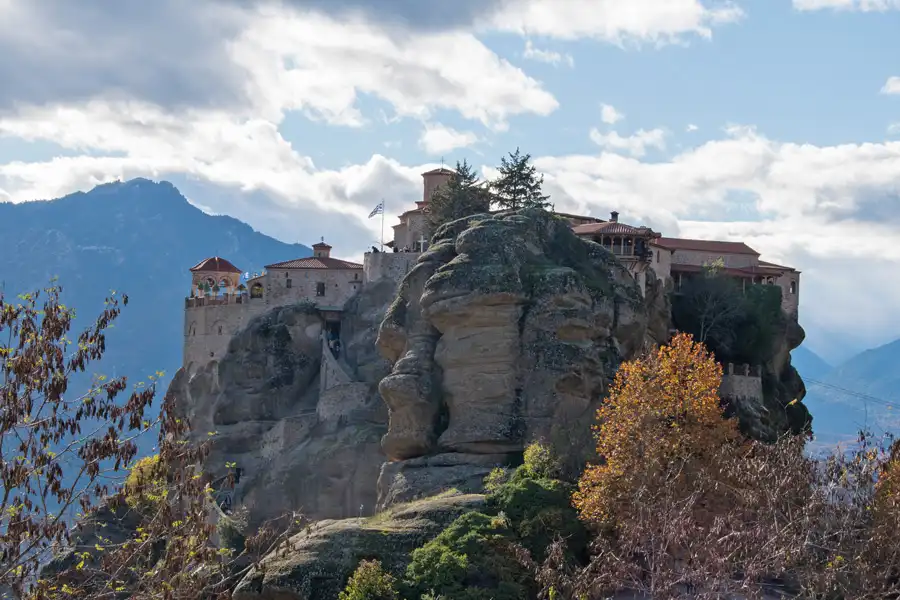
Plus, it lets you visit other places along the way. For example, you can stop in Delphi, which is another of the best day trips from Athens. Once in Meteora, having a car also makes it much easier to get around and visit the monasteries.
- Driving time: between 3.5 and 4 hours, depending on traffic when leaving Athens.
- Roads: most of the route is on highways and in good condition. It’s an easy drive, nothing too complicated, and everything is well signposted in English.
- Car rental cost: prices vary quite a bit depending on the season and, of course, the type of car. To give you an idea, in low season I’ve paid as little as 9 euros for a small car for three days; in high season, it can be around 70–80 euros for the same period.
- Fuel and tolls: expect around 40–50 euros extra in total.
- Where to rent: in Athens you’ll find all the international car rental companies, although I recommend this website—I’ve always found the best prices there.
✔️ Requirements to rent a car
- Passport
- Valid driver’s license with at least 1 year of experience; sometimes they ask for more.
- International driving permit if you’re coming from outside the European Union.
- Credit card; this is for the deposit, and debit cards are usually not accepted.
- Be at least 21–25 years old (depending on the company).
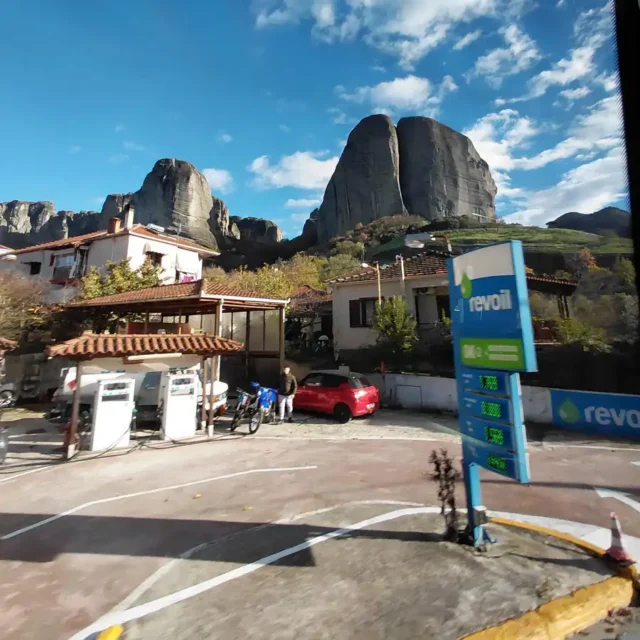
Keep in mind that there are no gas stations in the Meteora monastery area; you’ll need to fill up in the nearby towns. On the map above, I’ve marked all the gas stations in Kalambaka and Kastraki.
👍 My two cents: If you’re looking to stay connected during your trip,🤳 I recommend this eSIM for Greece and with that link you get a 5% off. If you're looking for a budget-friendly alternative this other eSIM starts at 4 euros.
4. Day trip
A tour from Athens is the easiest option if you don’t want to worry about a thing. It includes transport to Kalambaka and around the area, and of course, a guide.
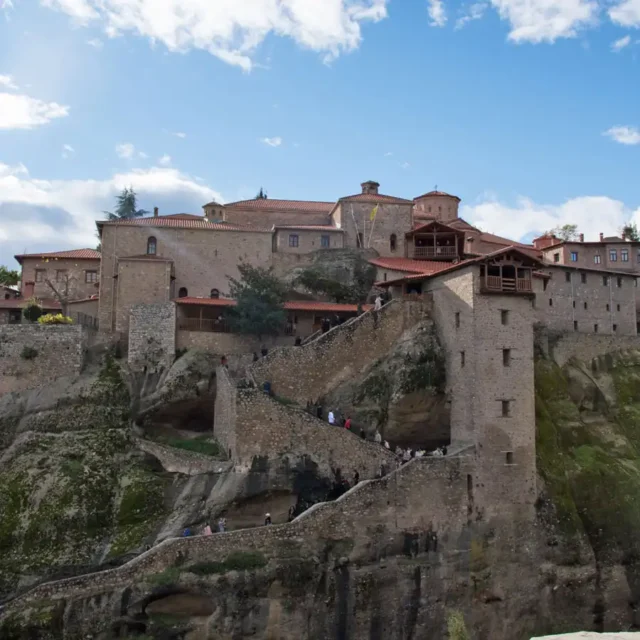
If you’re short on time, it’s usually the best choice and, if you’re traveling in low season, it can even be cheaper than taking the train. In mid-season, if you add up the train ticket plus what you’ll spend getting around Meteora, the tour can still come out cheaper.
I recommend this day-trip, —it’s very complete and well priced. It’s the one I took the first time I visited Meteora. The trip includes visits to several monasteries and viewpoints, and the guide is really good.
There are also more complete options if you want to visit other places, like this two-day trip that includes Delphi.
If you’re traveling in low or mid-season, you can book a few days in advance; in high season, it’s better to book earlier.
Monastery Days and Opening Hours
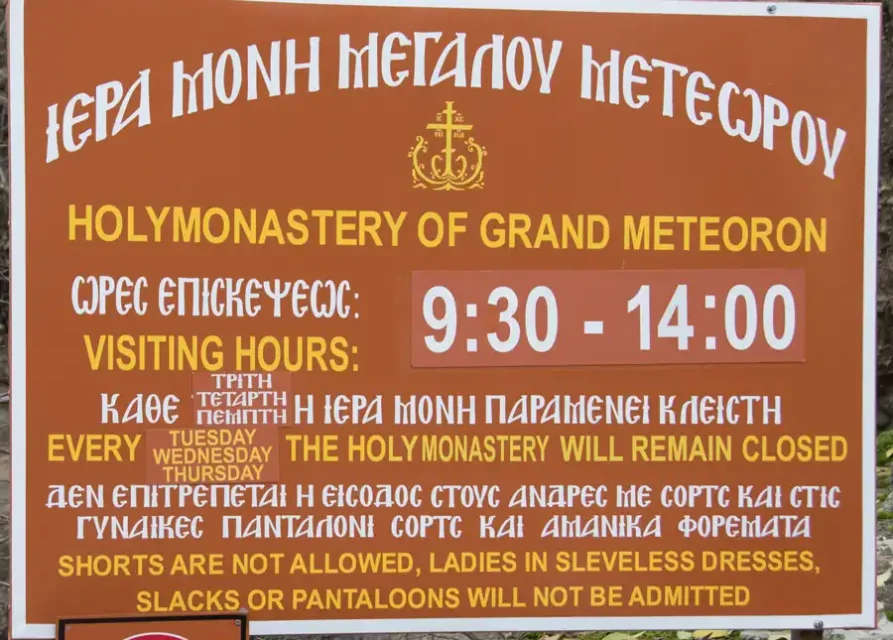
All monasteries have at least one closing day. If there’s a specific one you really want to visit, check its opening days so you don’t make the trip for nothing.
Also, opening hours can be quite limited. In the photo below, you can see the opening days and times for the Great Meteoron.
🤑 If you want to save on your next adventure, use this link from Booking to get 15% off your stay.
FAQs
Yes, it’s possible—especially with a tour or by starting very early. Just be ready for a long and pretty intense day, but in my opinion, it’s totally worth it.
Yes, especially if you want to visit all the monasteries and catch a sunset from the viewpoints. The experience is completely different when you’re not constantly checking the time. I’d recommend staying 1 or 2 nights.
Final Thoughts
Meteora is one of the most incredible places in Greece, and I highly recommend not missing it. I hope this guide helps you choose the best way to get to Meteora from Athens for you.
I’ll leave you with a quote:
“We don’t travel to escape life, but so life doesn’t escape us.”
If you have any questions, leave me a comment below and I'll help you as much as I can. If you found the article useful, share it with other travelers. Have a good trip! 😘
More about Greece


Hi, I’m Andrea, creator and author of Viajeros Activos (Active Travelers). I write about Southeast Asia, the Caucasus, and Europe. I’m a full-time traveler, passionate about good food, and always looking for new adventures.