This article may contain affiliate links.
Actualizado: 21 April, 2026
The ancient city of Tbilisi is one of the most beautiful in Europe, with a unique mix of Western and Eastern influences. You really feel this because it sits right on the edge of Europe, with strong Asian influence thanks to its neighbors and its role as an important stop on the Silk Road.
Its Soviet past is still noticeable in everyday life, which contrasts with the city’s strong religious spirit. On top of that, you’ll find old and modern buildings standing side by side without Tbilisi losing its authenticity.
In this article, I’ll show you the best places to see in Tbilisi—a city I know well after living there for a year. To make things easier, I’ve marked the must-see spots with a star and added a map.
✅ Must-see highlights tour: very complete and budget-friendly
✅ Georgian feast with folk dancing: fun and absolutely delicious 😋
✅ Sulfur bath entry: relaxing and affordable
✅ Soviet and urbex tour: ideal for curious travelers
Map
What to See in Tbilisi
1. Wander Through the Old Town ★
The Old Town is the historic heart of Tbilisi, where you can feel history around every corner. Founded in the 5th century by King Vakhtang I Gorgasali, its cobbled streets and turquoise-painted wooden balconies will take you straight back in time.
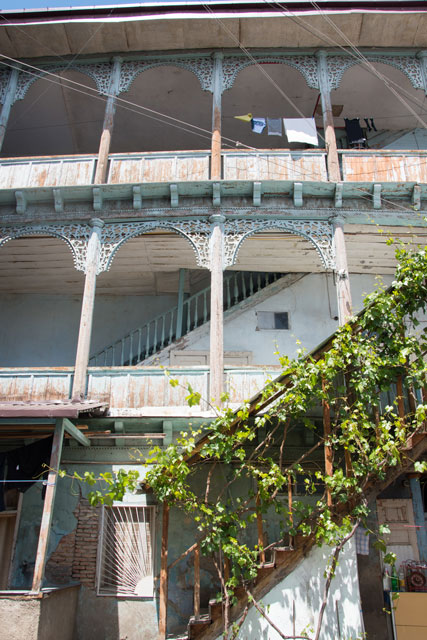
Some places you shouldn’t miss:
- Clock Tower: to me, it feels a bit artificial—kind of like a theme park—but it’s a city symbol. Still, since you’re already there, it’s worth a look so you can judge for yourself.
- Meidan Bazar: a very unique market set inside a tunnel, perfect for a quick wander. Yes, it’s touristy, but it’s one of the best markets in Tbilisi and a great place for souvenirs if you’re short on time.
- Tamada: this famous sculpture of the Toastmaster, holding a horn full of wine, represents the person who leads the toasts at Georgian celebrations (basically, the life of the party).

In the Old Town, one of the most beautiful areas is Abanotubani, where the famous sulfur baths are located (I’ll talk more about them later). There are also several interesting spots worth checking out:
- Abanotubani Tunnel: opened to the public relatively recently, and it has a quirky charm when you walk through it.
- Waterfall: right behind the baths, a surprisingly charming little corner.
- Bridge of Love: one of the most photogenic spots in the area.
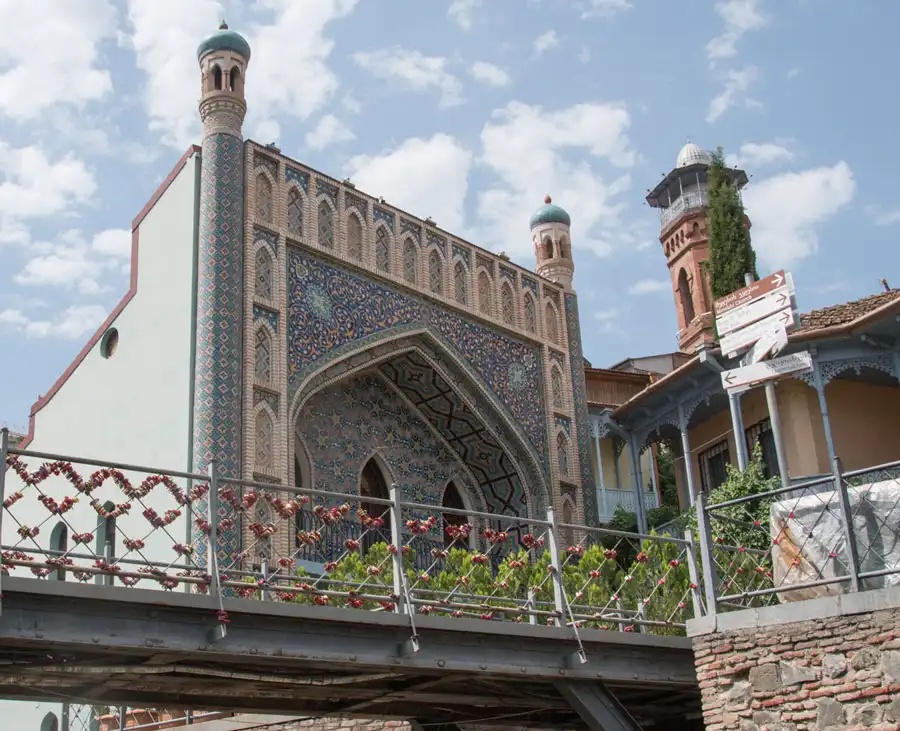
Getting lost in these streets is the best way to feel the soul of Tbilisi. Even if you don’t have much time, a short walk will leave you wanting more.
You can also explore it with this guided tour which is very complete, affordable and takes you to explore the most interesting places.
2. Religious Diversity in Tbilisi
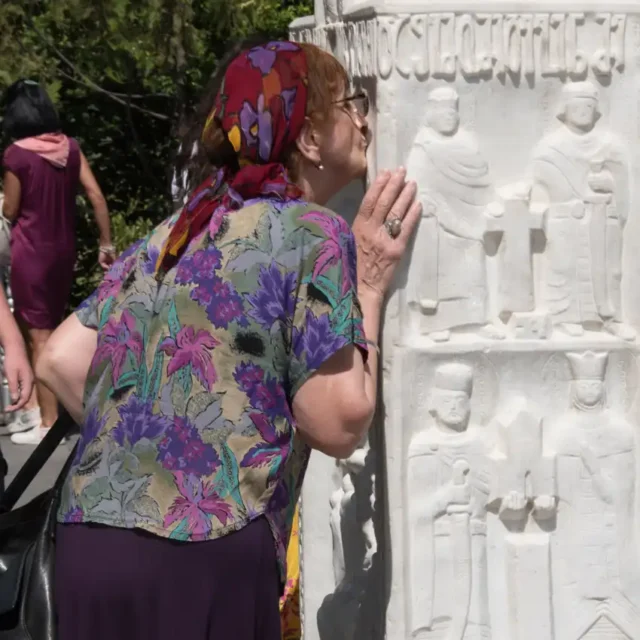
One of the things that surprised me most about Tbilisi is the mix of religions in the Old Town. Within just a few minutes’ walk, you can find Orthodox churches, a mosque, and a synagogue—something that’s less common than you might think.
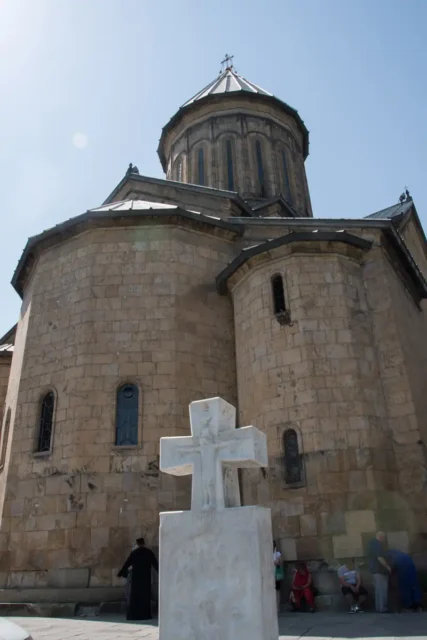
Here are some of the most iconic religious buildings in Tbilisi old town:
- Sioni Orthodox Cathedral: built starting in the 5th century. While it isn’t the largest today, it has historically been a key gathering place for Orthodox believers. It looks fairly simple from the outside, but it’s rich in history.
- Juma Mosque: originally built in the 7th century, it’s the largest in the city and one of those rare places where Sunni and Shia Muslims pray together. It’s not especially striking visually, but its real value is what it represents.
- Great Synagogue of Tbilisi: built in the 19th century by Jews from Akhaltsikhe, near the Turkish border, and still active today.
- Anchiskhati Basilica: the oldest church in Tbilisi, dating back to the 6th century, with a simple style that strongly reflects Georgian religious architecture.
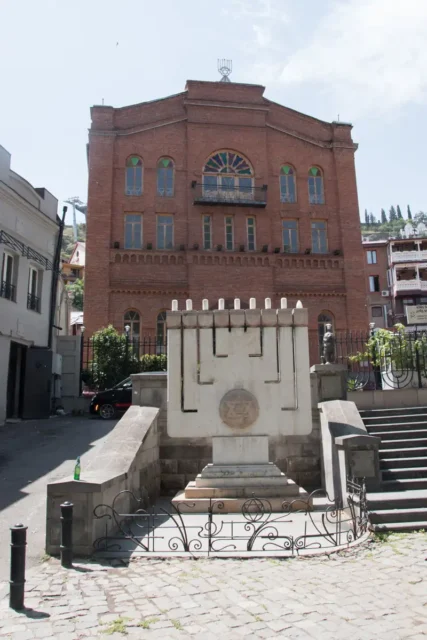
More than visiting them one by one, what’s really interesting is seeing how all these places coexist in such a small area. It’s yet another reflection of the cultural mix that defines Tbilisi.
3. Thermal Baths ★
The name of the city, Tbilisi, means “warm” in old Georgian, thanks to its sulfur thermal waters.
According to legend, king Vakhtang I Gorgasali was hunting in the area when the pheasants he caught fell into the water and ended up poached. True or not, today these waters are one of the city’s main attractions.
This is one of the best things to do in Tbilisi—and I really recommend not skipping it. It’s relaxing and, on top of that, very affordable.
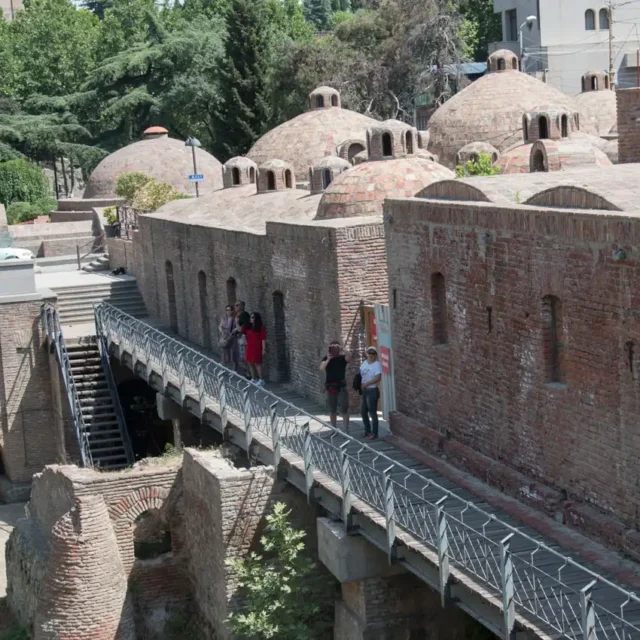
The main thermal baths are in the Old Town, and you’ll find both public and private options. The most popular ones with tourists are those with private rooms:
- Gulo's Thermal Spa: their brick domes are one of the city’s most iconic views.
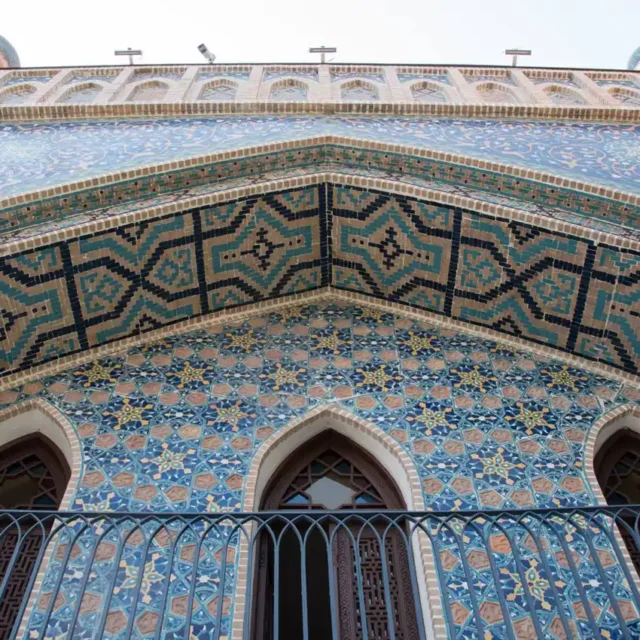
- Orbeliani Baths: their blue mosaic façade is one of the most photographed in Tbilisi. Many people mistake them for a mosque, since the minaret of the Juma Mosque is right behind them.
In the Old Town, my favorite were the Orbeliani Baths—you can book your entry here. They have private rooms at a good price and include towels.
If you’re on a budget and have some time, the baths at Lisi Lake are one of the best public options. They’re far from the center and quite simple, but they stand out for their cleanliness—something not all public baths in the city center can say. Plus, the area is perfect for a walk after your soak.
👍 Friendly Tip: don’t wear jewelry, as sulfur can damage it—and don’t forget your swimsuit if you’re going to public baths. 😉
4. Narikala Fortress ★
The ancient Narikala Fortress overlooks the city from the hill and is perfect for panoramic views of Tbilisi. It began to be built in the 4th century and has been destroyed and rebuilt several times over the centuries, including a major reconstruction after the 1827 earthquake.
If you like photography, this is a must—especially at sunset, when the light completely transforms the city.
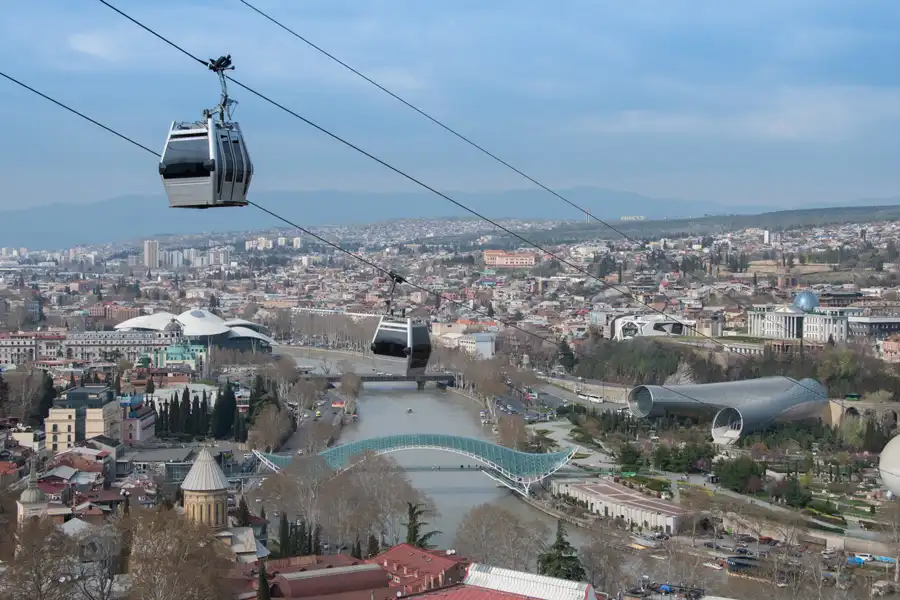
The best way up is by cable car from Rike Park. It’s not very long or high, but the views on the way up are spectacular. Totally worth it! From the top, you can see the Old Town, the Kura River, and of course, Kartlis Deda.
- Price: 2.5 lari per ride
- Payment method: Metro Money transport card*
- Opening Hours: 10 am to midnight in summer, and 10 am to 10 pm in winter
* If you plan to use public transport during your trip to Tbilisi, you’ll need to get the Metro Money card. It costs 2 lari, and you can top it up at machines or ticket offices in the stations. You can use it for the metro, buses, funiculars, etc.
5. Mother of Georgia ★
Right on Sololaki Hill, across from Narikala Fortress, stands Kartlis Deda—the Mother of Georgia. The original wooden statue was built in 1958 to celebrate Tbilisi’s 1,500th anniversary, and was later replaced with the current aluminum version.

It’s impressive both in size and symbolism: in one hand, she holds a bowl of wine to welcome friends, and in the other, a sword to defend against enemies. A pretty straightforward way to sum up the Georgian character—warriors, but with a big heart.
Ideally, combine this visit with Narikala Fortress, since they’re very close to each other and the views from up there are some of the best in the city.
👍 My two cents: If you want to stay connected in Georgia, 🤳 I recommend getting this eSIM for Georgia. Click on that links for a 5% discount.
6. Botanical Garden
The Tbilisi Botanical Garden was established in 1845 on what used to be the royal gardens of Narikala Fortress, on the slopes of Sololaki Hill. With its 98 hectares (that’s almost 200 football fields!), it’s a perfect place to walk and take a break from the city buzz.

The garden is home to more than 4,500 plant species from around the world and has beautiful corners all year round. The only thing I missed were signs to help identify the plants.
For me, the waterfall area is a highlight—especially in spring, when the water flows strongly and the colors really pop.
If you’re into climbing, there’s also a large rock wall on the cliff that’s free and very popular.
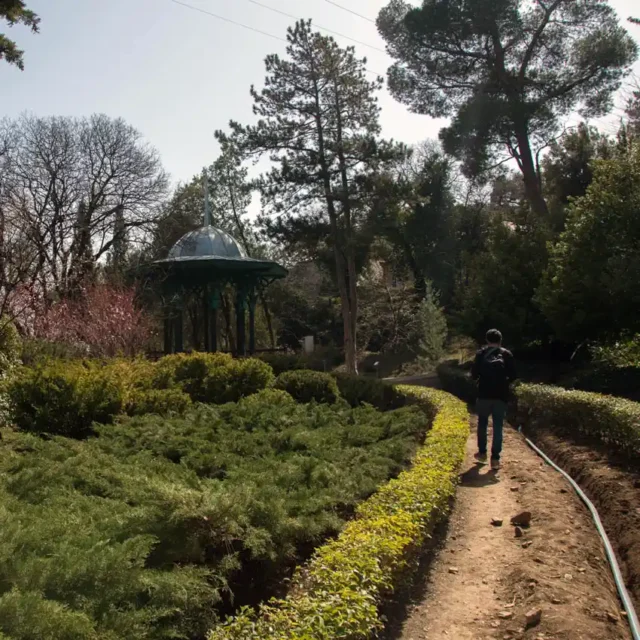
A relaxing plan I definitely recommend adding if you have time and want a green break during your visit to Tbilisi.
- Entrance Fee: 4 lari
- Payment method: solo en efectivo
- Opening Hours: 9:00 AM to 6:30 PM
7. Peace Bridge ★
The Peace Bridge is the most modern bridge crossing the Kura River, connecting the Old Town with the newer part of the city.
It’s quite an interesting contrast—you go from buildings with over 15 centuries of history to this futuristic bridge built in 2010 by Michele De Lucchi.
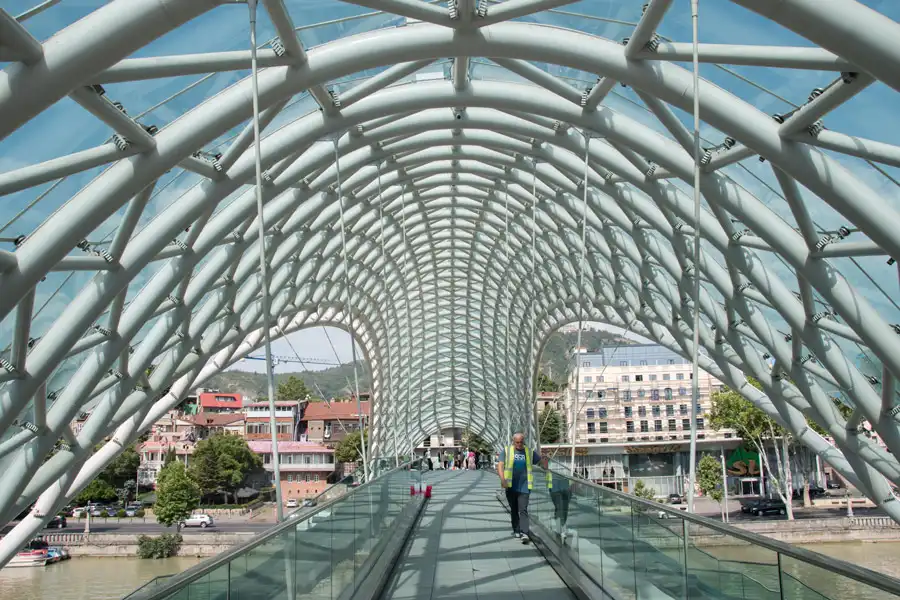
It has a curved metal structure with a glass roof that lets the light through, and even though it’s only for pedestrians, it’s one of the busiest spots in the city.
That said, it’s not without controversy. Many people criticize it and call it “Always Ultra” because they say it looks like a feminine pad… I won’t get into that, but once you see it, it’s hard not to think about it. 😅
Still, I think it’s beautiful. There’s a reason it’s one of the most photographed places in Tbilisi, and at night, with the LED lights, it looks even better. Definitely worth crossing at least once.
8. Rike Park
Right after crossing the Peace Bridge, you’ll find Rike Park—a modern area with well-kept green spaces and great views of the river and the Old Town with the hill in the background.
It’s a popular spot for both locals and tourists, and they often host concerts and outdoor events.
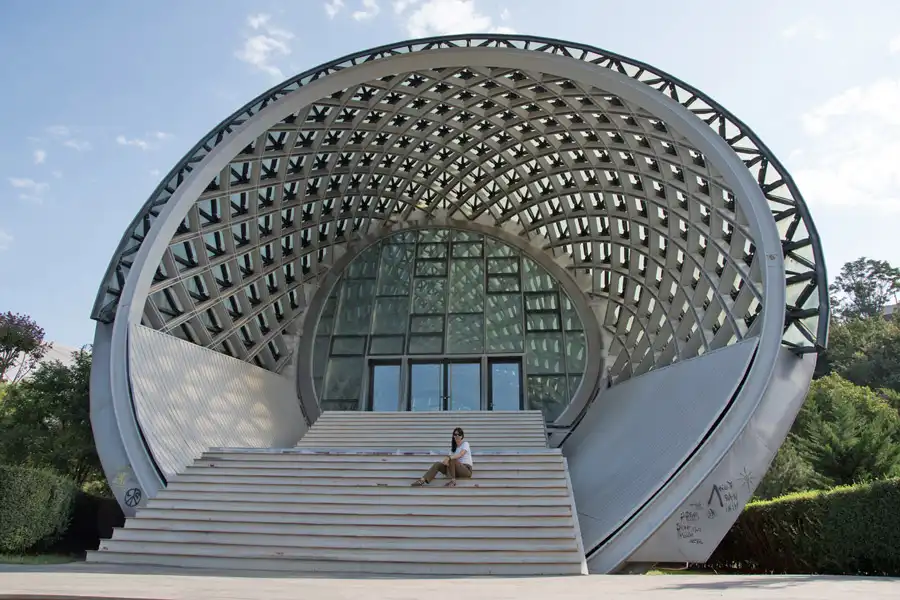
Some of its highlights include the dancing fountains, the cable car that goes up to Narikala Fortress and Kartlis Deda, and the Rike Concert Hall—a pretty unusual building that has never actually been used. It’s been put up for auction several times, but no one has bought it. Kind of surreal.
It’s a nice place to stop for a bit, relax, or just enjoy the atmosphere.
If you cross the Metekhi Bridge, you can get a close look at the statue of King Vakhtang I Gorgasali, the founder of Tbilisi, on horseback.

9. Public Service Hall
The Public Service Hall is one of the most striking buildings in Tbilisi and a great example of the city’s modern architecture.
It’s basically something like a city hall, since most public services happen here—from documents to weddings—and it’s run by the Ministry of Justice.
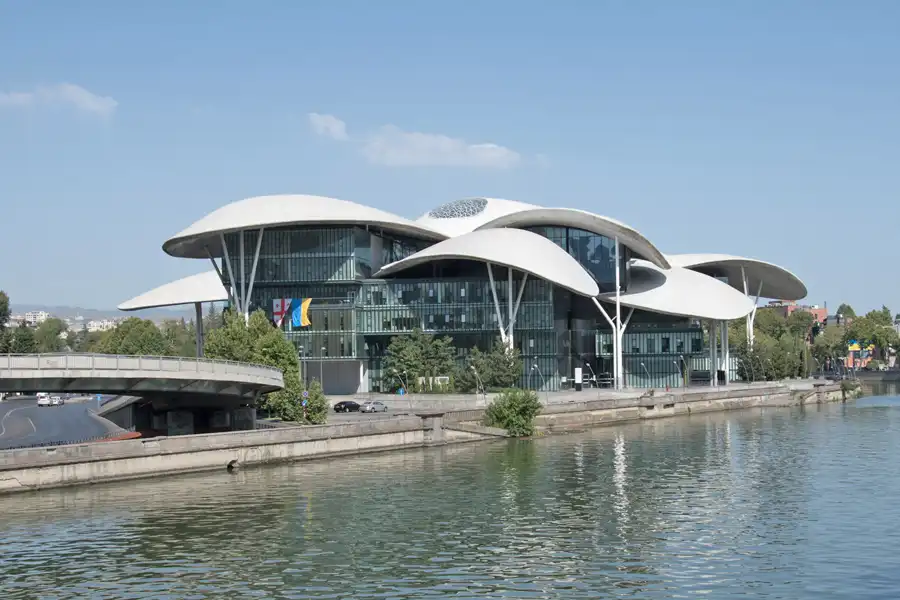
The building has a pretty unusual shape, like a group of giant mushrooms (there are 11 “caps” in total), which is why many people call it the “mushroom building.”
It’s right next to the Kura River, and both its shape and bright white color make it stand out in the skyline. I found it quite photogenic, especially from the bridge right across from it.
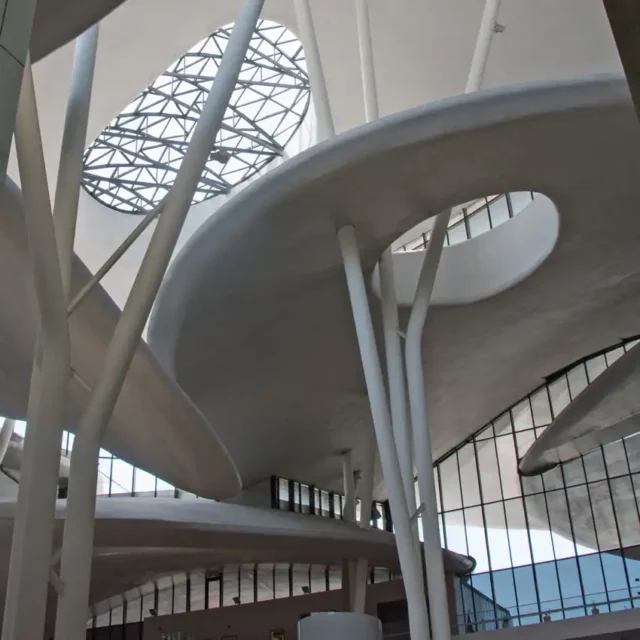
If you’re into architecture, you can even go inside—the interior is also impressive, especially the way the light comes in.
10. Freedom Square ★
Freedom Square is the most central point in Tbilisi and where much of the city’s life happens, from celebrations to protests.
For example, Georgia’s independence from the former USSR was celebrated here, so it carries quite a bit of historical weight.

To be honest, it’s more of a roundabout with heavy traffic than a traditional square, with a column in the center that used to have a statue of Vladimir Lenin on top. Today, it’s crowned by Saint George slaying the dragon—a powerful symbol of Georgian freedom.
It’s not the prettiest place in the city, but it’s an important landmark, and you’ll probably pass through it more than once.
11. Rustaveli Avenue ★
Shota Rustaveli Avenue is the main artery of Tbilisi and one of the best places to see everyday life in the city. You’ll find a bit of everything here: historic buildings, modern shops, theaters, museums… and quite a lot of traffic too.
The most interesting stretch runs from Freedom Square to the Rustaveli metro station. It’s perfect for a relaxed walk while paying attention to the details.

Along the avenue, you’ll find several important buildings:
- The monument to Shota Rustaveli, Georgia’s most important poet.
- Tbilisi Opera and Ballet Theatre.
- Parliament of Georgia.
- Georgian National Museum, with exhibitions on history, ethnology, and the Soviet occupation.
- National Gallery, focused on Georgian art (temporarily closed).

You’ll also come across small sculptures scattered around the area, so it’s worth keeping your eyes open. It’s a lively street and a great reflection of the city.
🎥 Fun fact: several chase scenes from Fast & Furious 9 were filmed in Tbilisi, including Shota Rustaveli Avenue. In the video below, you can spot Freedom Square at minute 1:09.

12. Opera and Ballet Theatre
The Tbilisi Opera and Ballet Theatre is one of the most eye-catching buildings on Rustaveli Avenue, with its neo-Moorish style that’s hard to miss. It was founded in 1851 and is one of the oldest in Eastern Europe.
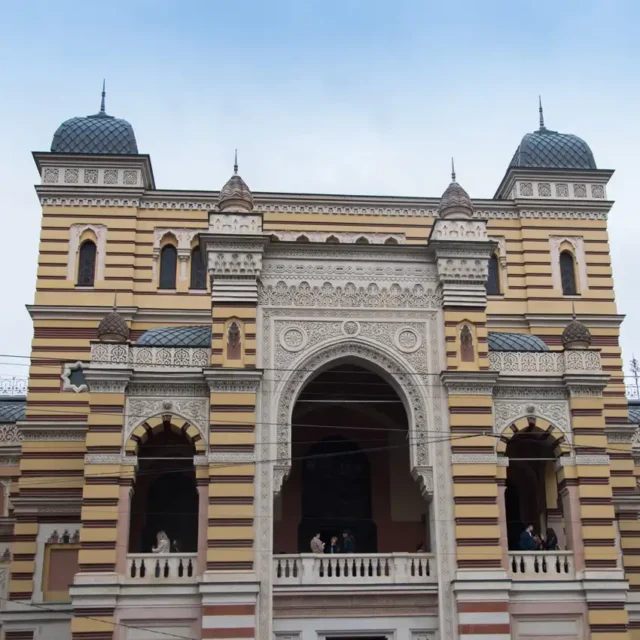
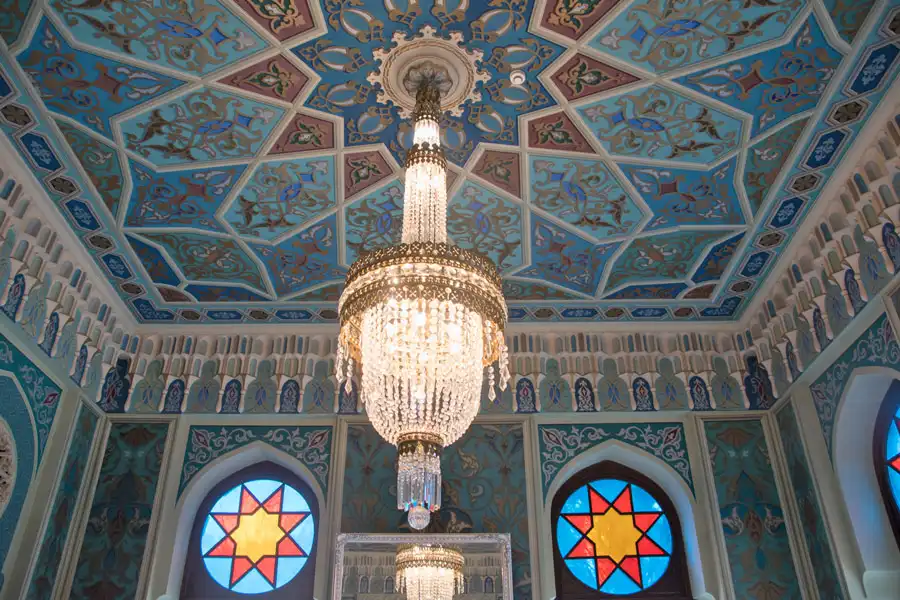
If you can, I recommend not just admiring it from the outside, but going inside as well. One of the best ways to do that is by attending a performance, since both opera and ballet in Georgia are usually very affordable.
To give you an idea of prices, for example, tickets to see Carmen start at around 10 lari. Honestly, that’s ridiculously cheap for an opera.
To watch Swan Lake, I paid 80 lari for the most expensive seats. It felt incredibly affordable considering the quality of the dancers, which is also something deeply rooted in their culture.
That said, keep these details in mind:
- Tickets: they sell out quickly, so book well in advance. You can buy them on Tkt.ge, which also sells tickets for concerts and sports events.
- Dress code: no need to dress up fancy, but avoid going too sporty. Casual clothes or even jeans are perfectly fine.
- Summer: unfortunately, there are no performances in July and August—if you’re visiting then, you’ll have to settle for seeing it from the outside.
13. Sameba, the Cathedral ★
The Holy Trinity Cathedral of Tbilisi, known as Sameba, is one of the largest Orthodox churches in the world and one of the most impressive buildings in the city.
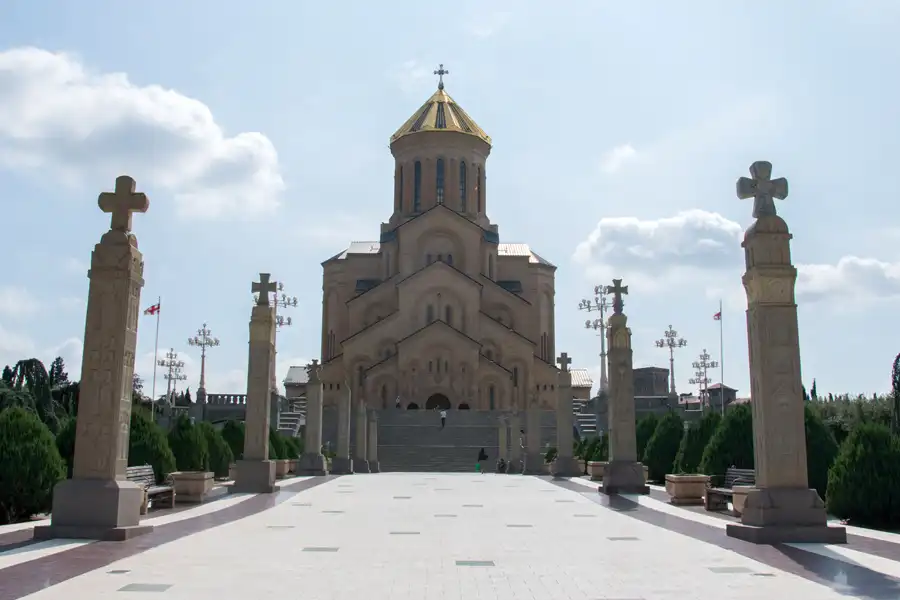
Construction started in 1995 and was completed in 2004, as part of the celebration of 1,500 years of the Orthodox Church in Georgia. Even though it’s relatively new, it has a traditional style that blends well with the country’s other churches.
Inside, it’s huge—big enough to hold around 10,000 people—and it’s where the main religious celebrations take place. To give you an idea, that’s more than half the capacity of a large basketball arena.
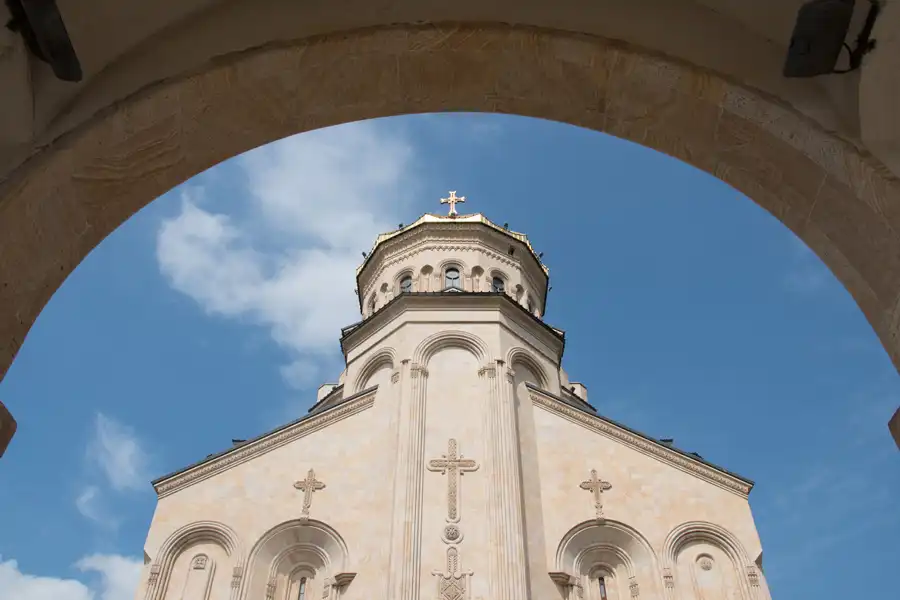
The construction caused quite a bit of controversy at the time, as it was built on top of an old Armenian cemetery.
Beyond that, it’s worth visiting both for the interior and for the surrounding gardens and bell tower at the entrance. It’s one of those places that impresses more for its size than for the details.
- Opening Hours: 7 am to 10 pm
14. Chronicles of Georgia ★
The Chronicles of Georgia is one of the most impressive—and at the same time, lesser-known—places in Tbilisi. It’s a bit far from the center, but if you have time, it’s definitely worth the trip. In fact, I’ve included it in my Soviet architecture guide to Tbilisi.

It’s a massive monument made up of huge columns with reliefs showing scenes from Georgian history and religious figures. It’s hard to grasp the scale until you’re standing right in front of it—it’s pretty striking.
On top of that, you get views of what’s known as the “Tbilisi Sea,” a large reservoir that makes the whole place feel even more open.
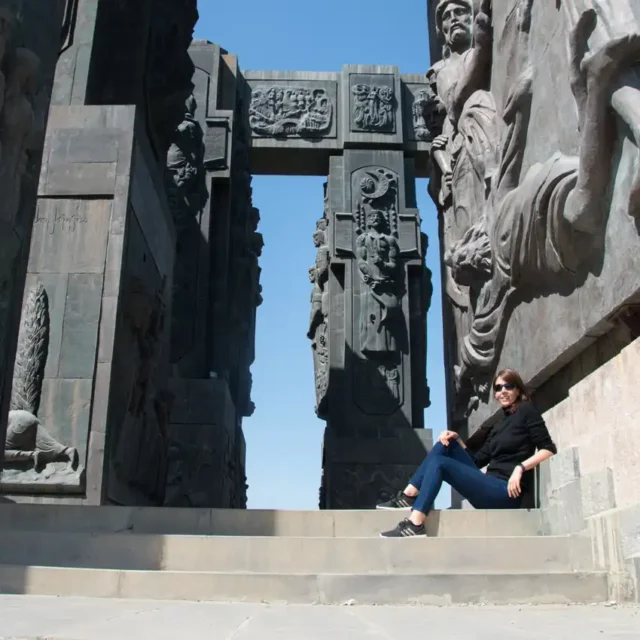
It really surprised me because it doesn’t always show up in guidebooks, yet it’s one of the most spectacular places I saw in the city. If you’re into photography, you’ll have plenty to work with here.
15. Georgian Food ★
After so much sightseeing, there comes a time to stop and eat—and in Tbilisi, that’s never a problem. Georgian cuisine is hearty and full of flavor, perfect for recharging your batteries.

Some of the most typical dishes you shouldn’t miss are:
- Khinkali: a kind of dumpling, usually filled with meat, though vegetarian options exist. Without a doubt, my favorite Georgian dish!
- Khachapuri: cheese-filled bread, with the most famous version being Adjaruli, shaped like a boat and topped with egg and butter in the center.
- Lobio: a very flavorful bean stew.
- Kharcho: a rich meat soup with walnuts.
- Badrijani: eggplant rolls with a walnut paste. Even if you don’t like eggplant (like me), give them a try—you might be surprised.

If you’re interested in exploring Georgian cuisine, there are several food experiences I can recommend, like this food tour with 9 tastings. This cooking class is also well worth it.
But if you only have time for one activity, nothing beats going to a Supra—the traditional Georgian feast. I recommend this Georgian dinner that includes a folk dance show. A fun experience that will keep all your senses busy.
⭐ Related article: 9 Traditional Georgian Dishes
16. Georgian Wine
To go with all that food, nothing beats a good glass of wine—and here, Georgia is in a league of its own. It’s said to be the country with the oldest winemaking tradition, going back around 8,000 years.
In fact, archaeological remains have been found in places like the caves of Uplistsikhe showing that wine was already being made back then.

What’s interesting is that in many areas, wine is still made using traditional methods, with clay vessels buried underground called qvevri, which give it a very distinctive taste.
In Tbilisi, you’ll find wine bars and cellars everywhere, where you can do tastings or just sit down and enjoy a glass. One of the best-known places is 8000 Vintages, which has a huge selection both for drinking there and buying bottles to take home.

On top of that, wine is pretty cheap. Some people even joke that it’s cheaper than water… so, you know what to do. 😄🍷
If you’re into wine, another great idea is to join a tasting with an expert or even visit the Kakheti region.
17. Dezerter Bazaar ★
Dezerter Bazaar is the largest and most authentic market in Tbilisi—and a great way to see everyday local life.
This isn’t the place to buy souvenirs like in other markets. Instead, you come here to see how locals shop: fruit, vegetables, meat, spices, nuts… it’s a bit chaotic, but full of life.
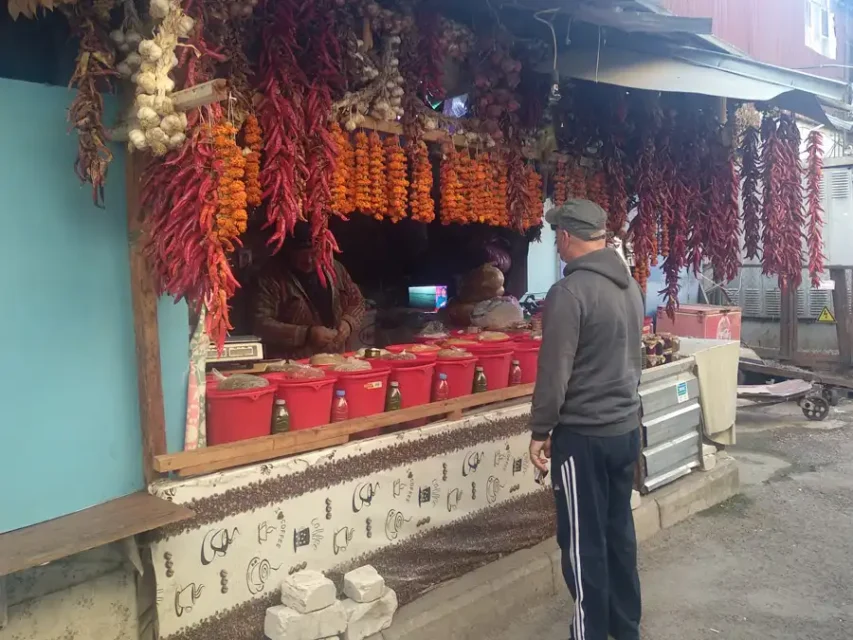
It’s the kind of place where you can easily spend a good while wandering around the stalls, spotting products you might have no idea about—but still find interesting.
I really liked it because it feels very real, without that overly touristy vibe you get in other markets.
- Opening Hours: every day from 7 am to 6 pm
⭐ Related article: Best Markets in Tbilisi: Complete Guide
18. Dry Bridge Flea Market
The Dry Bridge flea market is one of the most curious markets in Tbilisi. The name comes from the fact that there used to be a river under the bridge, but it was covered, and now there’s a road instead.
Here you’ll find a bit of everything, but especially items from the Soviet era: gas masks, helmets, old cameras, instruments… a little bit of everything.
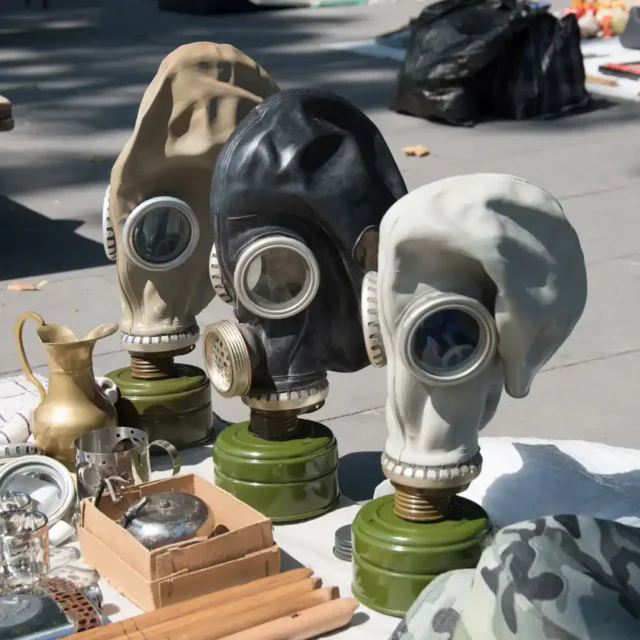
There are also swords, wine horns, and other traditional objects, although many are quite well-made replicas.
In another area, you’ll find newer items, with paintings, crafts, and good-quality wool products standing out.

That said, even though it’s a flea market, don’t expect super cheap prices. The items are quite selective, and it shows.
Still, it’s worth stopping by—even just to browse for a while—because it’s one of those unique places you don’t find in every city.
It’s not a must-see for everyone, but for me, it’s my favorite market in Tbilisi. If you have time, it’s definitely worth a visit.
- Opening Hours: 10:30 am to 7 pm aprox.
19. Stalin’s Printing House
This is one of those lesser-known places that I personally found quite interesting. From the outside, it doesn’t look like much, but inside it hides the underground printing press used by Stalin in the early 20th century.

Here, Bolshevik propaganda was printed in Russian, Georgian, and Armenian between 1903 and 1906. To reach the press, you have to go down through some very narrow tunnels, which already adds a bit of excitement to the visit.
Back then, there was always someone keeping watch in the house above, and if the police showed up, they would give a warning so the press could be shut down and avoid being discovered.
After being destroyed in 1906, it was later rebuilt as a museum during the Soviet era, which is what you can visit today.

When I went, the man in charge (and unofficial guide) called himself Soso—Stalin’s nickname—and it was quite something, because he’s a big supporter of the Soviet regime. His English is very basic, but he really makes an effort, which makes the visit more entertaining.
It’s not a must for everyone, but if you’re into history or want to see something different, don’t miss it.
You can visit on your own, or join this tour that includes several stops—perfect if you’re interested in Soviet architecture and urbex.
- Entrance Fee: 10 lari
- Opening Hours: open Monday to Friday, theoretically from 10 am to 6 pm, but it’s not fixed. I went at 11:30 and Soso was there to welcome me.
⭐ Related article: Guide to Soviet Architecture in Tbilisi (and mosaics)
20. Graffiti and Street Art
Street art is quite present in Tbilisi, and it’s something I personally really like, because I think it says a lot about a city.
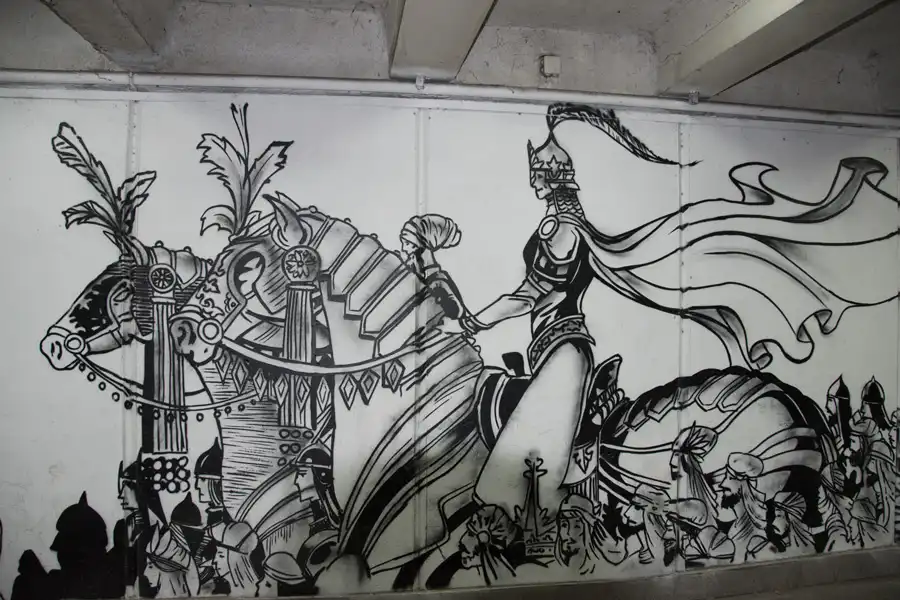
You’ll find graffiti in many areas, even in the center and the Old Town, although there are spots where it’s more concentrated.
One of the best-known artists is Goshaart (Instagram link), a Ukrainian artist living in Tbilisi. Her work is usually quite simple, but with a playful touch, and you’ll spot it in different corners of the city.

If you’re into this, one of my favorite places is the underpasses at Heroes’ Square, where pretty much every wall is covered in graffiti. You’ll also find quite a bit around Fabrika and its surroundings.
It’s not something everyone looks for when traveling, but if you enjoy this kind of art, it’s a different plan that gives you another perspective on the city.

21. Mtatsminda and Turtle Lake ★
If you like nature, Tbilisi makes it easy without going too far from the center. The city is surrounded by hills, so in just a few minutes you can be out hiking with great views.
One of the most popular spots is Mtatsminda Park, where you’ll find several routes of different levels, from easy walks to more challenging hikes. What do they all have in common? Great views over the city.
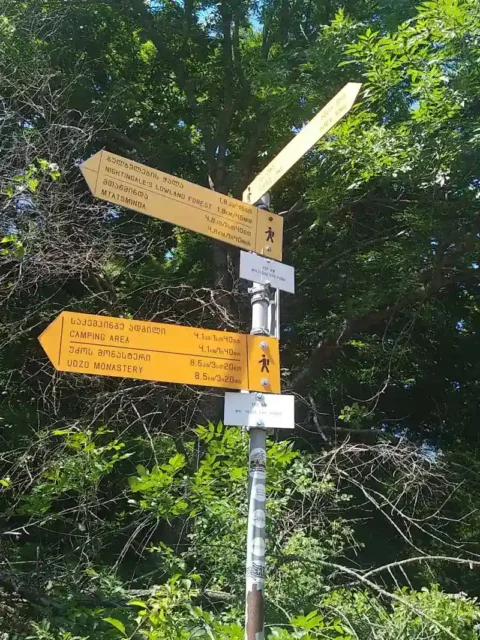
Here are a couple of hiking routes I like the most, but you’ll find more on Wikiloc:
- A route that passes by Turtle Lake and continues through the park up to the amusement park. In total, it’s 18 km with 896 m of elevation gain—you can find the route on Wikiloc.
- A shorter option is just doing Turtle Lake, about 8 km with 400 m of elevation gain, which you can also check on Wikiloc.
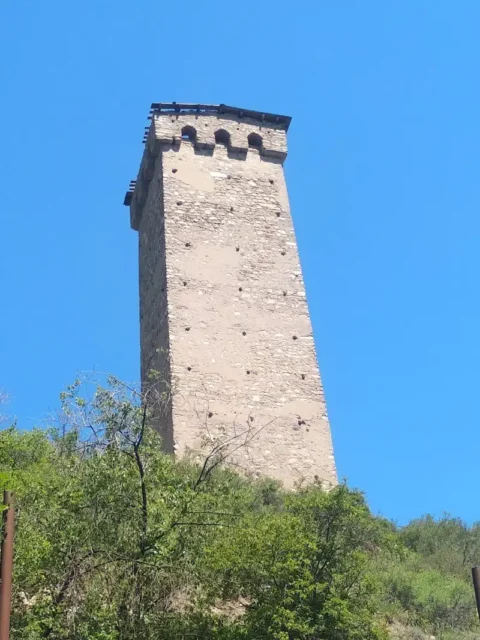
You can also take the cable car from Vake Park and skip the uphill part. Here are the details:
- Price: 1 lari per ride
- Payment method: Metro Money card
- Opening Hours: 10 am to 10 pm (although I should warn you—it’s sometimes closed for maintenance or runs on different hours without much notice)
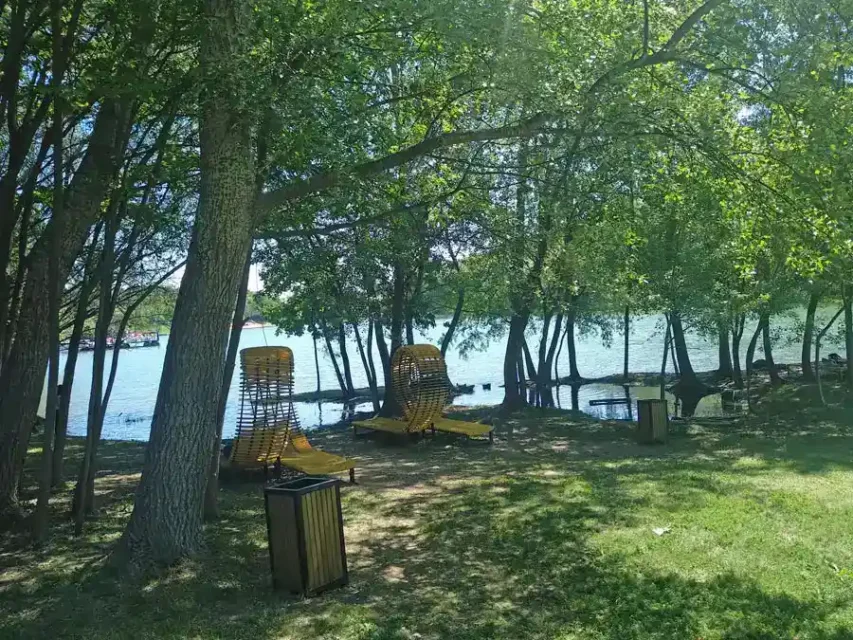
The lake itself is a nice place to walk around, grab a drink, or even have a picnic. There are bars, restaurants, and even a zip line crossing the lake for those looking for a bit more excitement.
22. Sunset
In the Old Town and city center, you’ll find several hotels and restaurants with great views—perfect for dinner while enjoying the sunset

That said, the best views of the city are from up in the hills, at Mtatsminda Park, which I mentioned in the previous section.
There’s also an amusement park there, great if you’re traveling with family. The Ferris wheel is a classic and costs 10 lari.
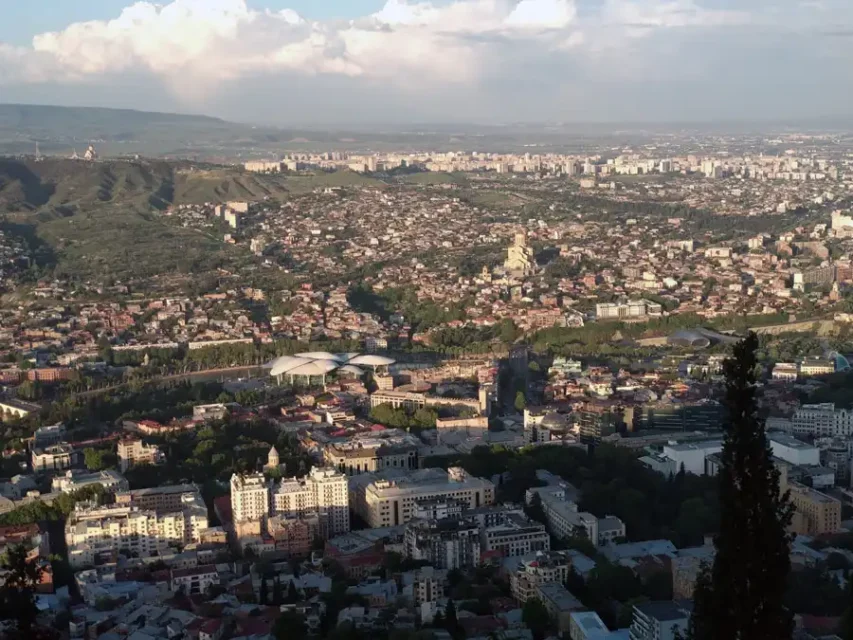
There’s also a picnic area and a large open space with amazing views over the city, completely free. One of the best moments is seeing the cathedral lit up—it really stands out.
If you want, you can stay for dinner. I can recommend the Funicular Restaurant. It’s a bit pricier than average, but the food is good, and you can also just go for a drink.
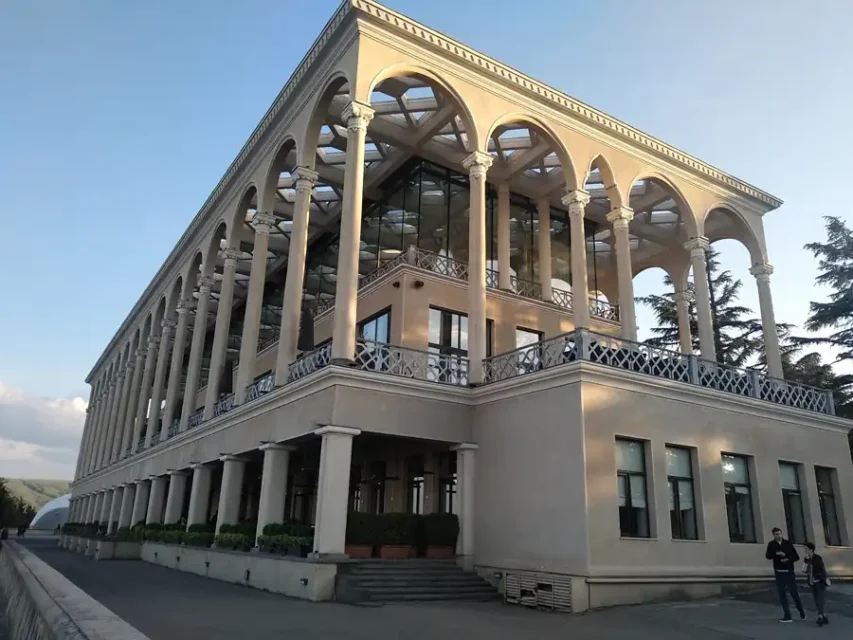
To get to the park, you have several options:
- Hiking: the route I mentioned in the previous section
- Funicular: costs 10 lari per ride, paid with the Metro Money card, and runs from 10 am to 10:30 pm
- Bolt: it costs around 20 lari
FAQs
1. How many days should I spend in Tbilisi?
Ideally, you should spend between 2 and 3 days to see the main sights at a relaxed pace and enjoy the city without rushing around. Also, if you plan to use public transport or join tours, Tbilisi is a great base for visiting nearby places.
My Georgia itinerary can give you some inspiration for planning your visit to Tbilisi.
2. Is Tbilisi worth visiting?
Yes, absolutely. It’s a different kind of city compared to other European destinations, with a unique mix of cultures, Soviet history, religious tradition, and modern life. Plus, it’s not as overcrowded as other destinations yet, which is always a bonus—and it also makes it more affordable.
3. What’s the best time to visit?
Spring and autumn are the best times, with pleasant temperatures and less heat than in summer.
That said, Tbilisi can be visited all year round—it really depends on what you’re looking for.
In my article Tips for Traveling to Georgia I go into detail about each season.
4. Where to stay in Tbilisi?
If you’re staying for just a few days, it’s best to stay in the Old Town or nearby central areas, so you can walk to most places.
I can recommend staying at Epigraph, which has a great location, includes a good breakfast, and offers excellent value for money. Also, Cozy Baity is a good option if you’d prefer an apartment.
5. How to get around Tbilisi?
If you stay in the center, you’ll be able to visit many places on foot.
For other trips, the most practical option is public transport: metro and buses. Also, Bolt (similar to Uber) works very well and is affordable. You can read more in my guide on how to get around Tbilisi, Georgia, and visit nearby countries.
I wouldn’t recommend driving in Tbilisi because of the crazy traffic, but it’s ideal for exploring the rest of the country. Just keep in mind that Georgian drivers tend to drive fast and quite aggressively. In my guide on how to rent and drive a car in Georgia you’ll find more details.
6. Is Tbilisi safe?
In general, yes. It’s quite a safe city for tourists. As always, just use common sense.
That said, Georgia is a fairly conservative country, so some attitudes or situations might feel different from what you’re used to.
In my guide on tips for traveling to Georgia I go into more detail about this so you can travel well informed.
7. Do you need to bring anything special for the trip?
Not really, but it’s a good idea to prepare based on the time of year or the activities you’re planning.
Also, keep in mind that travel insurance is mandatory to enter the country. I recommend this international insurance with very good coverage. Through that link, you can get a quote and it already includes a 5% discount.
In my guide on what to pack for Georgia you can read more.
Final Thoughts
As you’ve seen, there are plenty of things to see in Tbilisi. It’s a very complete city where you can combine history, culture, nature, food, and even some more unusual plans without leaving the city.
Personally, it really surprised me—especially because of that unique mix and how authentic it feels at times.
I hope this guide helps you decide what to do in Tbilisi based on your preferences.
I’ll leave you with a quote:
“People don’t take trips, trips take people.”
John Steinbeck
If you have any questions, leave me a comment below and I'll help you as much as I can. If you found the article useful, share it with other travelers. Have a good trip! 😘
More about Tbilisi



Hi, I’m Andrea, creator and author of Viajeros Activos (Active Travelers). I write about Southeast Asia, the Caucasus, and Europe. I’m a full-time traveler, passionate about good food, and always looking for new adventures.
Wow... your articles are some of the best I've read. I'm planning my trip to Tbilisi and I love all the information you share. I've never been to the opera, but thanks to your influence, I've already bought tickets. Haha.
Thank you…
Hello Natalia
Thank you so much for your kind words, I'm so happy! 🙂
You're right to take advantage of going to the opera, at least to see that the prices are incredibly cheap there.
The building's interior is also beautifully detailed. Don't miss a tour during the intermission.
Have a good trip!