This article may contain affiliate links.
Updated: July 3, 2026
Georgian food is one of those travel surprises hardly anyone talks about enough, and it ends up stealing your heart… and adding a few extra pounds, let's be honest.
Georgian cuisine reflects the country's history: a crossroads between Europe and Asia, where merchants, conquerors, and empires passed through along the Silk Road. All of that left its mark on the local food, creating a rich, diverse cuisine with a strong identity that varies from one region to another.
In this article, I'll show you what to eat in Georgia, along with some restaurant recommendations in Tbilisi.
I definitely fell in love with more than a few dishes... and had my fair share of embarrassing foodie moments along the way.
📶 eSIM to stay connected from the moment you land — 5% off
🏨 Accommodation with great deals
🛡️ Travel insurance with up to 15% off
🚗 Car rental at unbeatable prices
What Is Georgian Food Like?
If I had to describe traditional Georgian food in just a few words, I'd say it's generous, full of flavor without being spicy, and incredibly comforting.
Meals are usually served family-style, with the table covered in dishes to share. It's all part of Georgia's culture and its famous hospitality. The usual approach is to order several dishes and try a bit of everything, so showing up hungry isn't optional.
Although many people picture Georgian cuisine as being heavily meat-based, the truth is that it offers plenty of variety and is especially surprising for the number of delicious vegetarian dishes you'll find.
Typical Ingredients in Georgian Cuisine
There are a few ingredients you'll come across again and again in Georgian food that give it its distinctive character.
Walnuts are probably the star ingredient, used in sauces, fillings, and spreads for appetizers. Local cheeses are also very common, along with fresh herbs like cilantro and tarragon, garlic, onions, and fragrant spices.
Freshly baked bread and dough-based dishes are another essential part of the cuisine. In Georgia, bread isn't just something on the side—it often takes center stage, as it does with khachapuri and shotis puri.
Meat, especially beef, pork, and lamb, also plays an important role, although the recipes vary by region. Some areas are known for heartier dishes, while others give more prominence to vegetables and legumes.
And then there's the wine, which deserves an article of its own. In Georgia, wine isn't simply something to drink with your meal—it's been part of the country's cultural identity for thousands of years.
A Cuisine Shaped by Geography and History
Much of the richness of Georgian cuisine comes from the country's location between Europe and Asia.
Over the centuries, Georgia absorbed commercial and cultural influences from Persia, Anatolia, Russia, and other peoples of the Caucasus. Rather than simply copying those traditions, it adapted them into a cuisine that is uniquely its own.
That's why you'll sometimes come across dishes that vaguely resemble pastries, dumplings, or stews you already know—but with completely different flavors.
A Deeply Regional Cuisine
One of the things I love most about Georgian food is that there's no single way to define it.
Every region has its own ingredients, techniques, and influences, so traveling through Georgia is also a journey through its flavors.

For example, Adjara, on the Black Sea coast, is famous for Adjaruli khachapuri and a cuisine influenced by Turkey. Samegrelo is known for its bolder, more intensely seasoned flavors, while Abkhazia is recognized for its use of peppers and aromatic spices. And in Kakheti, the country's main wine-producing region, wine and food go hand in hand.
So if you're planning a road trip through Georgia, get ready to discover that the food changes almost as much as the scenery.
Table of Traditional Georgian Dishes
Before we dive into each dish (and drink), here's a quick overview to give you an idea of what you'll find and which ones might best suit your taste.
| Dish / Drink * | What It Is | Type | Vegetarian-Friendly |
|---|---|---|---|
| Badrijani | Eggplant rolls with walnut paste | Starter | ✅ |
| Pkhali | Vegetable and walnut spread | Starter | ✅ |
| Khinkali | Filled dumplings | Main | ⚠️ Depends on the filling |
| Khachapuri | Cheese-filled bread | Main | ✅ |
| Lobiani | Bean-filled bread | Main | ⚠️ Depends on the variety |
| Lobio | Spiced bean stew | Main | ✅ |
| Kharcho | Spiced beef soup | Main | ❌ |
| Mtsvadi | Grilled meat skewers | Main | ❌ |
| Chakapuli | Lamb stew with tarragon | Main | ❌ |
| Shotis puri | Traditional Georgian bread | Side | ✅ |
| Mchadi | Corn bread | Side | ✅ |
| Churchkhela | Walnut and grape must candy | Dessert/snack | ✅ |
| Georgian wine | Wine made in traditional clay qvevri | Drink | ✅ |
| Chacha | Grape pomace brandy | Drink | ✅ |
| Georgian lemonades | Flavored carbonated soft drinks | Drink | ✅ |
* If you click on the name of any dish that catches your eye, you'll jump straight to the section where I tell you more about it.
Starters
1. Badrijani (Eggplant Rolls with Walnut Paste)
Badrijani was the dish that surprised me the most. Personally, I'm not a big fan of eggplant—neither the taste nor the texture. But badrijani is a completely different story.
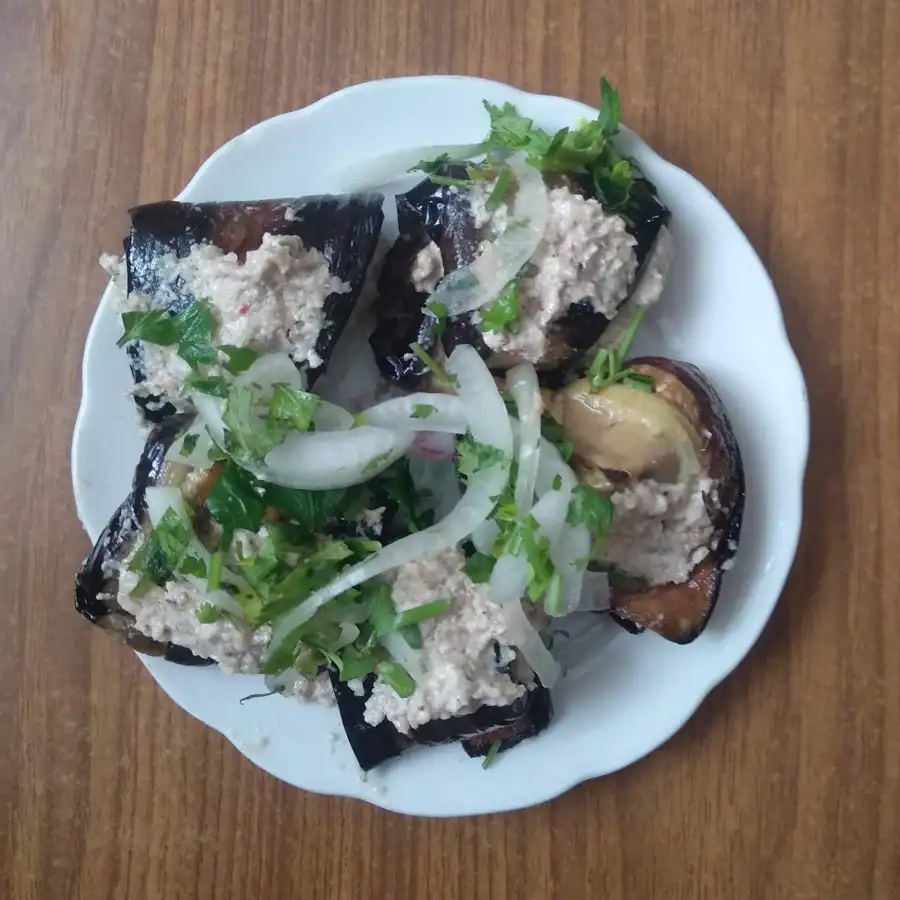
It consists of thin slices of eggplant, grilled or fried beforehand, then rolled around a paste made with ground walnuts, garlic, spices, and pepper.
It's served cold, topped with pomegranate seeds that add a touch of freshness and color, although sometimes it's garnished with onion and cilantro, like in the photo above. A typical serving includes about five rolls.
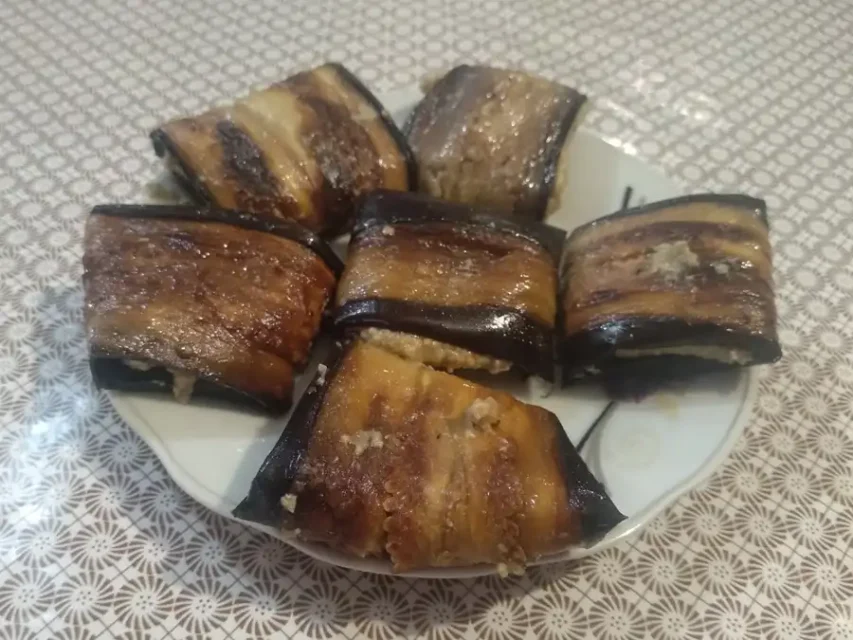
The cooking softens the flavor of the eggplant, while the walnut filling completely transforms it. Even if you're not an eggplant fan, I'd still recommend giving it a try. There's a good chance it'll surprise you.
🔹 Where to eat it in Tbilisi
- Shavi Lomi: One of my favorite places to try badrijani, with excellent Georgian food, a cozy atmosphere, and a beautiful terrace.
- Mapshalia: Famous for being one of the cheapest places in the city to enjoy homemade Georgian food.
🔹 Typical price
Between 8 and 15 lari.
2. Pkhali (Vegetable and Walnut Spreads)
Pkhali is another cold appetizer you'll find on almost every Georgian menu, and it deserves more attention than it sometimes gets. The word pkhali literally means "chopped vegetables," which is essentially what it is: a spread made with vegetables, walnuts, garlic, onion, and spices, shaped into small balls (or sometimes one large ball, like in the photo below).

Spinach is the most common version, but you'll also find eggplant and beetroot varieties, each with its own color and flavor. You can order whichever one you like, and sometimes all three are served together, making for a very colorful plate. They're usually garnished with pomegranate seeds or the classic combination of cilantro and onion.
🔹 Where to eat it in Tbilisi
- HB Sanapiro: Serves an excellent pkhali.
- Cafe Daphna: A simple but tasty option.
- Salobie Bia: A great choice for traditional Georgian starters.
🔹 Typical price
Between 6 and 12 lari.
Main Dishes
3. Khinkali (Georgian Dumplings)
Khinkali are the most iconic dish in Georgian cuisine and one of the first things you should try when you arrive. You may also see them spelled jinkali, and you'll find them on the menu at just about every restaurant in the country.
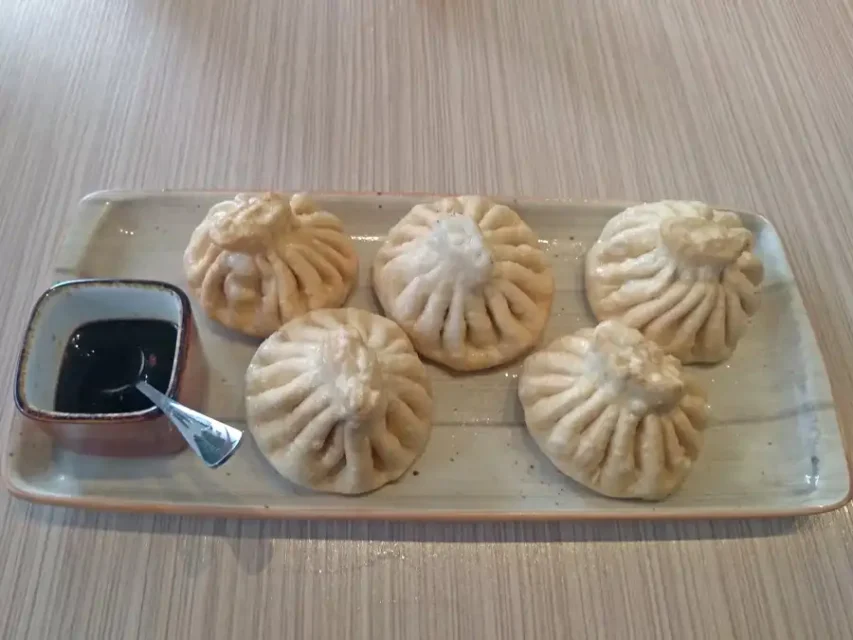
They're thick dough dumplings, more similar to Asian dumplings than Italian ravioli, although they have a distinctive look of their own: a little pouch of dough gathered into pleats at the top.
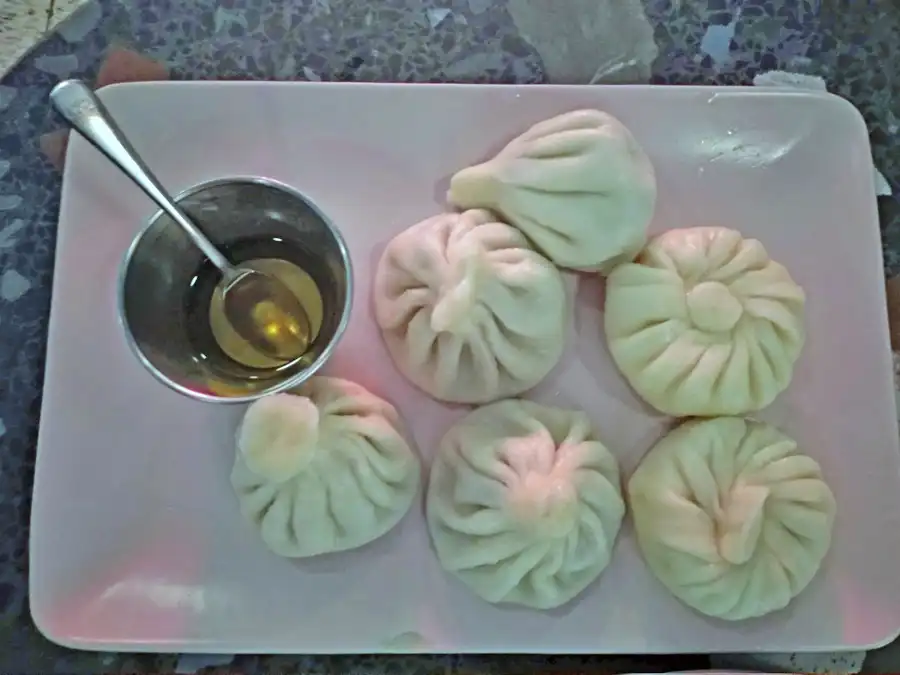
⭐ Fun fact: Georgians say the best khinkali have 25 pleats. Good luck counting them. 😅
They originated in the mountainous regions of northern Georgia, but today they're eaten all over the country and throughout other parts of the Caucasus
The traditional filling is spiced minced meat, seasoned with onion, garlic, and herbs. In Tbilisi, pork or a pork-and-beef mix is the most common, and in my opinion, it's also the tastiest.
There are also some excellent vegetarian options: potato, potato and cheese, or mushroom. Both potato versions have a fairly mild flavor, while the mushroom ones quickly became my favorite.
They're usually boiled, although you can also find fried khinkali. They may be less healthy, but that crispy outer layer is absolutely delicious.
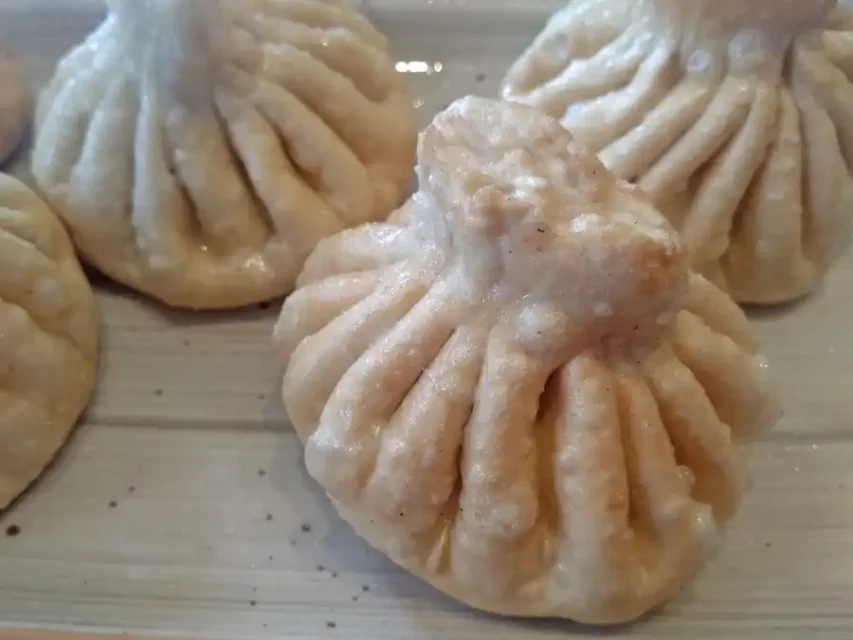
🔹 How to eat them
This is the important part—and I'm speaking from experience. There's a right way to eat them.
Hold the dumpling by the pleated top, turn it upside down, take a careful bite, and sip the hot broth inside first. It's created during cooking, and it's one of the best parts. Then you can eat the rest.
The tough pleated top that you hold onto is left on the plate. The first time I had khinkali, I ate the whole thing, pleats included. Rookie mistake! 😅
🔹 Where to eat it in Tbilisi
- Cafe Daphna: My favorite place because the khinkali are homemade and incredibly flavorful, especially the spiced meat ones. They also let you order them individually, which is quite unusual. Most restaurants require a minimum of three or five per filling.
- Zodiaqo Restaurant: A great local spot with excellent value for money.
- Pasanauri: Even though it's a chain, the food is very good, and the khinkali are especially tasty.
🔹 Typical price
Between 1.5 and 2.5 lari per unit, depending on the restaurant.
4. Khachapuri (Cheese-Filled Bread)
Khachapuri is Georgia's most famous dish abroad and the one with the greatest number of regional variations. You may also see it spelled jachapuri.
It's hard to describe because, depending on where you are, khachapuri can look like a pizza, a stuffed pie, or a boat overflowing with melted cheese.
What every version has in common is a generous dough and sulguni, a traditional Georgian cheese with a stretchy texture that's made in both fresh and aged varieties.
🔹 The three most popular varieties
Adjarian khachapuri, also known as Acharuli, is the best-known version and the one I highly recommend trying.
The dough is shaped like a boat and filled with plenty of cheese, butter, and an egg with a runny yolk. It comes from the Adjara region on the Black Sea coast, although you'll find it all over Georgia
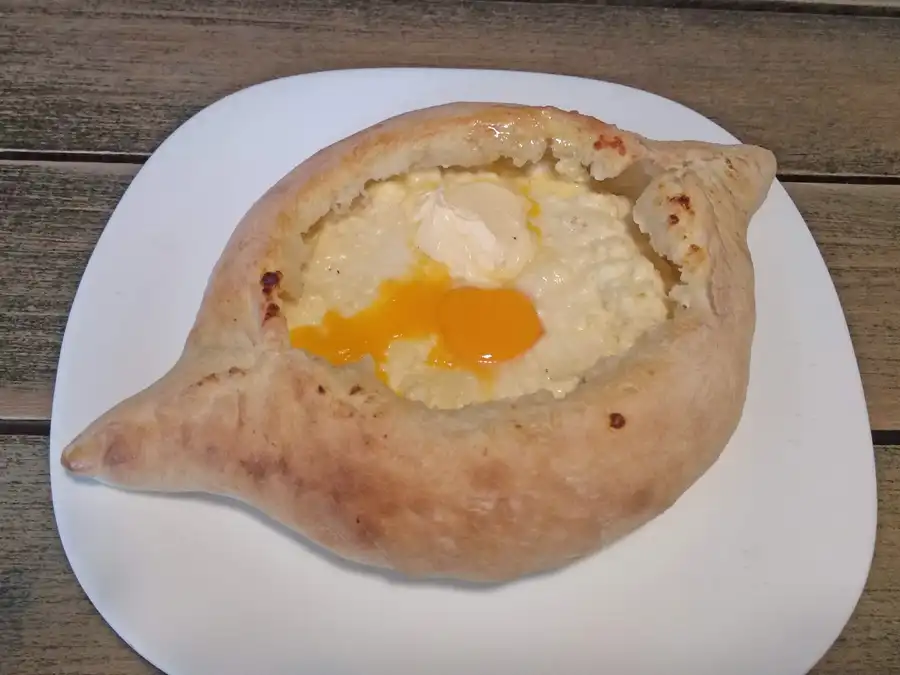
Imeruli khachapuri comes from the Imereti region and looks more like a round stuffed pie, with a cheese filling and a thinner crust. It's less dramatic than the Adjarian version but just as delicious. You'll find it not only in restaurants but also in bakeries, where they'll warm it up for you—perfect for a quick bite between sightseeing stops.
Megruli khachapuri is similar to the Imeruli version but comes with twice the cheese: inside and on top, creating a wonderfully crispy layer when served hot.
🔹 How to eat it
Adjarian khachapuri has its own little ritual. First, use a fork to mix together the cheese, melted butter, and runny egg yolk until everything becomes creamy.
Then tear off pieces of the thick crust with your hands and dip them into the filling. The first time I tried it, I had no idea how it was supposed to be eaten and started cutting it with a knife and fork... another rookie mistake.
🔹 Where to eat it in Tbilisi
- Retro Restaurant: Their Adjarian khachapuri is a little more expensive than average, but the quality of the ingredients makes it worth every lari. It's the best one I've had in Tbilisi.
- Pasanauri: A solid choice with several locations across the city.
- Local tone (traditional bakeries): The perfect place to try Imeruli khachapuri.
🔹 Typical price
Between 12 and 25 lari, depending on the type and the restaurant.
5. Lobiani (Bean-Filled Bread)
Lobiani is technically a type of khachapuri—but without the cheese. I mention this because some places classify it that way, which can be a little confusing. In reality, it's a dish with its own identity and deserves a place of its own on the table.

It comes from the mountainous region of Racha in northwestern Georgia. It has a thin crust, similar to Imeruli khachapuri, filled with mashed cooked beans seasoned with plenty of spices. On English menus, you'll sometimes see it listed as beans bread, which is a fairly descriptive translation.
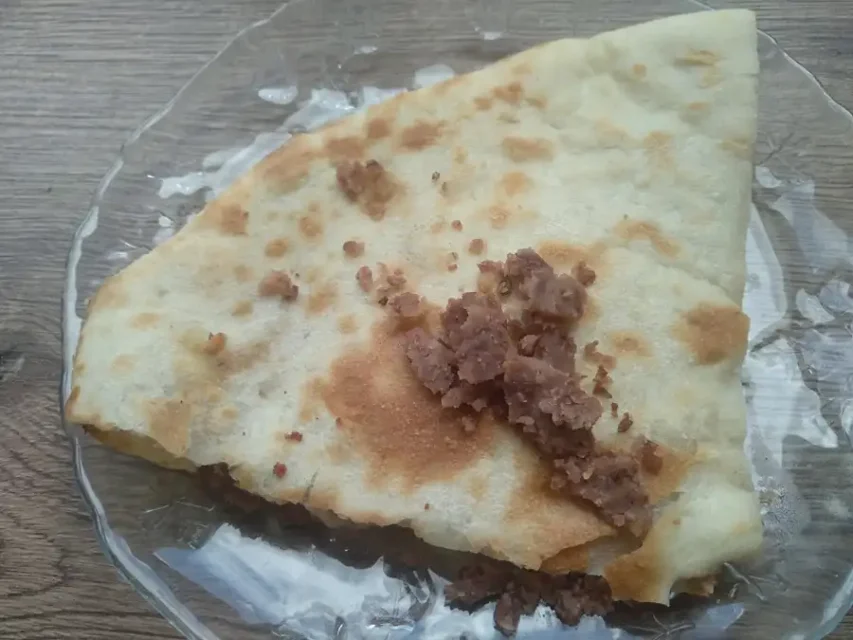
Red beans are the most common, although you may also find versions made with black beans. My favorite is smoked lobiani, which includes small pieces of smoked pork mixed into the filling, giving it a much deeper and more interesting flavor.
👉 One honest warning: I found it surprisingly difficult to find a really good lobiani in Tbilisi. Many of the ones I tried had a fairly dry filling, which makes them a bit hard to eat. Below are a couple of places that do it really well, including one in Mtskheta.
🔹 Where to eat it in Tbilisi and beyond
- Ornament Express Café : The best lobiani I've tried. The filling was perfectly seasoned and not dry at all.
- Salobie Bia (Tbilisi): A very flavorful version.
🔹 Typical price
Between 6 and 10 lari.
6. Lobio (Spiced Bean Stew)
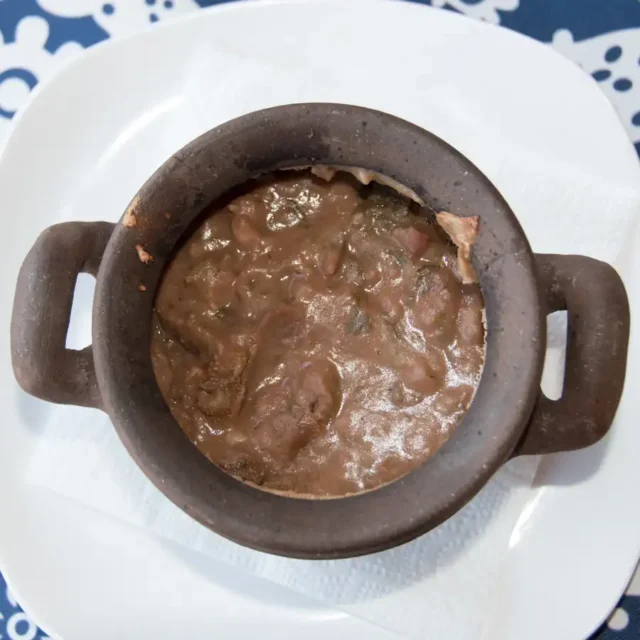
The name can be a little confusing if you've just read about lobiani, but they're completely different dishes. Lobio is a spiced bean stew served hot in a clay pot, and it's one of those simple dishes that tastes far better than it looks.

It's made with fresh cilantro, garlic, and a blend of spices that varies from one cook to another, with the consistency of a thick bean stew. Every restaurant has its own recipe, and you can definitely taste the difference.
It's served with mchadi, a fried cornbread that isn't particularly flavorful on its own but pairs perfectly with the stew, balancing the spices and making it ideal for dipping. It's completely vegetarian and a wonderfully comforting meal on colder days.
🔹 Where to eat it in Tbilisi
- Salobie Bia: My favorite place to eat lobio.
- Funicular Restaurant: Also serves an excellent version, with fantastic views over the city.
- Pasanauri: A very tasty option.
🔹 Typical price
Between 6 and 14 lari.
7. Kharcho (Hearty Beef Soup)
Kharcho is the heartiest soup in Georgian cuisine and one of the most flavorful. You may also see it spelled jarcho. It originated in the Samegrelo region in northwestern Georgia and has a bold, distinctive flavor.
It's made with beef broth, rice, ground walnuts, and a generous blend of spices that gives it its characteristic reddish color. It's served with dried plums and fresh herbs on top, adding a delicious tangy contrast. You can also find lamb and chicken versions.
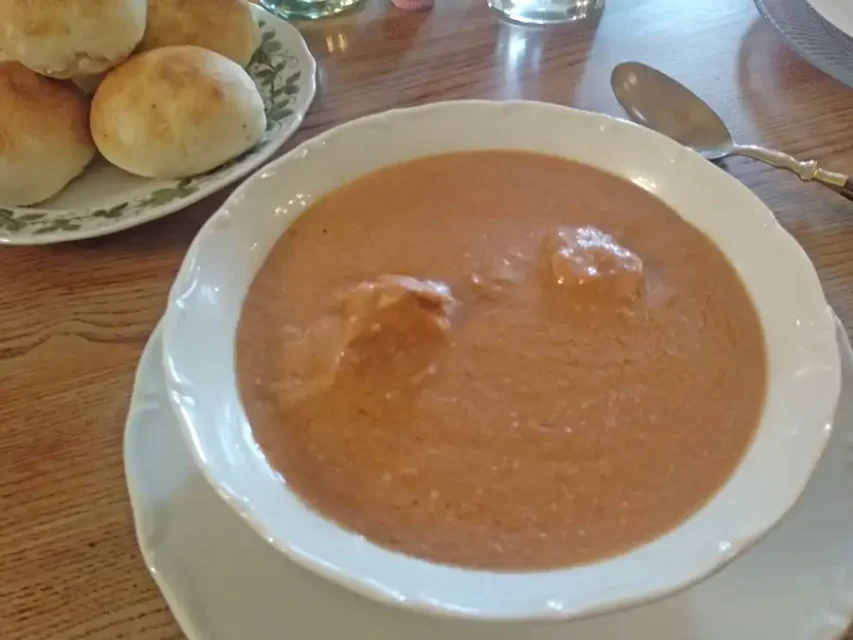
It's a spicy soup—or at least one with plenty of bold seasoning—and it's especially comforting after a long day of exploring the city. It's served in bowls with shoti bread, which I'll talk about later.
🔹 Where to eat it in Tbilisi
- Chashnagiri: An excellent traditional version.
- Salobie Bia: A great choice for authentic Georgian cuisine, especially their soups.
- HB SanapiroA reliable option that's easy to find around the city.
🔹 Typical price
Between 8 and 18 lari.
8. Mtsvadi (Georgian Grilled Skewers)
Mtsvadi is Georgia's take on grilled meat skewers, and it's one of those dishes that looks simple but is packed with flavor. It consists of chunks of meat—usually pork or beef—marinated and slowly cooked over charcoal or wood embers, which gives it its signature smoky taste.
The traditional marinade is wonderfully simple: onion, salt, pepper, and sometimes a splash of vinegar or wine. No fancy sauces. The secret lies in the quality of the meat and careful control of the fire, and Georgians take both very seriously. Mtsvadi is a staple at family gatherings and celebrations, and enjoying it outdoors with a good glass of Georgian wine is hard to beat.
It's served with pickled raw onions and sometimes tomatoes or tkemali, a tangy wild plum sauce that pairs beautifully with grilled meat.
🔹 Where to eat it in Tbilisi
- Machakhela: A very popular choice for grilled meats.
- Pasanauri: A great version among its traditional Georgian dishes.
🔹 Typical price
Between 10 and 20 lari per serving.
9. Chakapuli (Georgian Herb and Wine Stew)
Chakapuli is one of those dishes you won't find on every menu all year round, which already tells you something about it. It's a lamb stew made with fresh tarragon, white wine, and green plums or tkemali, and it's closely associated with springtime in Georgia, especially Orthodox Easter, when it's traditionally prepared at home.
Tarragon is the ingredient that defines the dish more than anything else. If you're not familiar with this aromatic herb, chakapuli may come as a pleasant surprise. It has a distinctive flavor that's somewhere between herbal and anise-like, unlike anything you'll commonly find in Spanish or Latin American cooking.
The result is a stew that feels remarkably fresh and light for a meat dish, with a sauce you'll want to keep dipping bread into. It's completely different from kharcho—far more delicate and aromatic—and perfectly showcases the Georgian love of fresh herbs.
🔹 Where to eat it in Tbilisi
- Shavi Lomi: An excellent modern take on the dish.
- Salobie Bia: A beautifully executed traditional version.
🔹 Typical price
Between 10 and 22 lari.
Traditional Breads
10. Shotis Puri (Georgian Bread Baked in a Clay Oven)
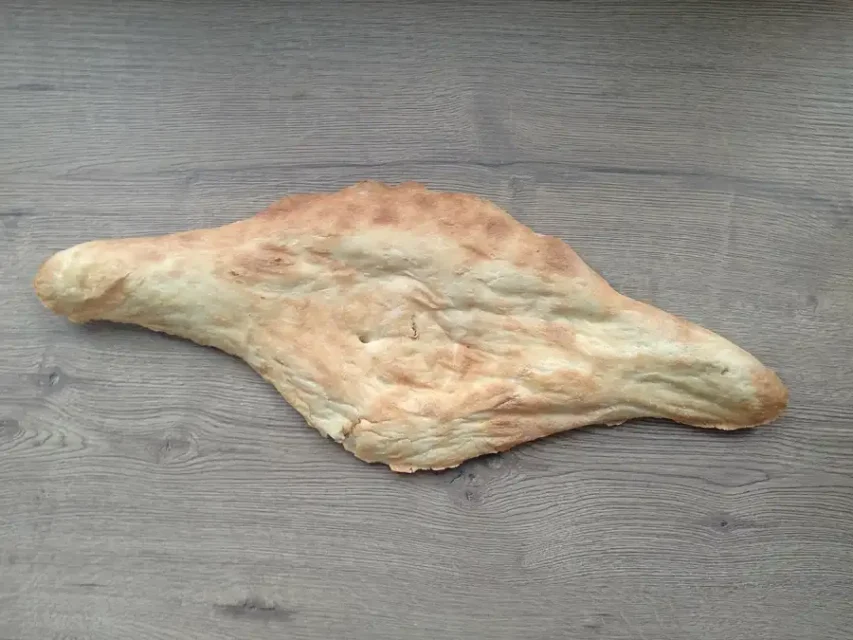
Shotis puri is Georgia's traditional bread, and once you've tried it fresh from the oven, it's hard to forget. It has a distinctive long, curved shape that resembles a boat or canoe, naturally formed during the baking process.

It's made with nothing more than wheat flour and water, then baked in cylindrical brick or clay ovens called tone, found in traditional Georgian bakeries. Watching the process is fascinating: the baker stretches the dough, shapes it, and sticks it directly onto the inside wall of the oven, where it bakes at a high temperature in just a few minutes. That's what gives it its crispy crust and soft, airy interior.
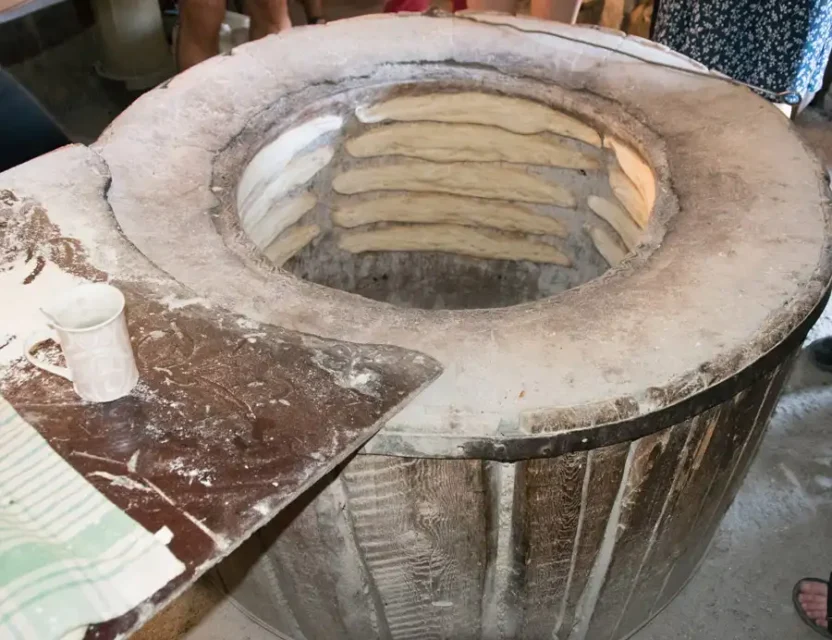
There are two main varieties. The most common has a thick crust with a generous, fluffy crumb and a lovely toasted flavor. The other is narrower and thinner, with a crispier texture throughout. Both are delicious, but the thicker version, fresh out of the oven, is something special.
🔹 Where to eat it in Tbilisi
Traditional bakeries that make shotis puri are usually tiny shops selling little more than this bread. They're not hard to find in Tbilisi—just follow your nose.
🔹 Typical price
Between 1 and 3 lari, depending on the size and location.
11. Mchadi (Cornbread)
Mchadi is Georgia's other traditional bread, although it's quite different from shotis puri. It's made with cornmeal and water, shaped into small round cakes, and either pan-fried or baked, depending on the cook.
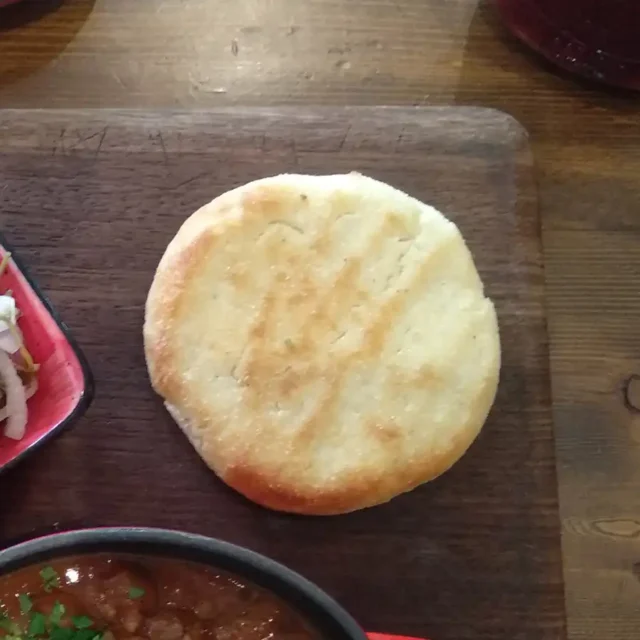
On its own, it's not an especially flavorful bread, but it works wonderfully as a side dish without overpowering the meal. It's commonly served with lobio, the bean stew I mentioned earlier, and the pairing works beautifully: the mchadi is neutral and hearty, balancing the stew's spices while holding up well for dipping.
🔹 Where to eat it in Tbilisi
- Salobie Bia: Often serves it alongside several traditional dishes.
- Restaurants specializing in traditional Georgian cuisine.
🔹 Typical price
Between 1 and 2 lari per piece, though it's often included with lobio and other dishes.
Desserts and Snacks
12. Churchkhela (Walnut and Grape Must Candy)
Churchkhela is Georgia’s most recognizable sweet and probably the first thing that catches your eye in any market across the country: those long, colorful strings hanging from stalls, looking like candles or sausages, and unlike anything you’ve ever seen before.
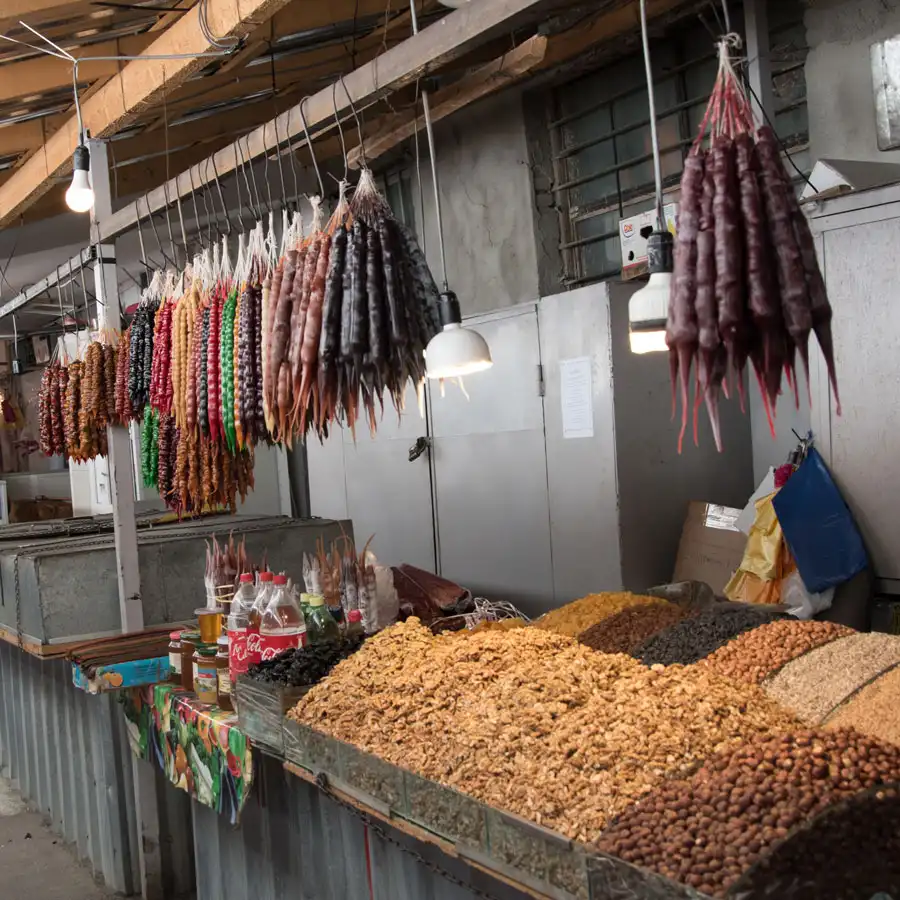
They’re made by threading walnuts, hazelnuts, or dried fruit onto a string and repeatedly dipping them into grape must thickened with corn flour, sometimes wheat flour, until several layers build up and they form that distinctive cylindrical shape.
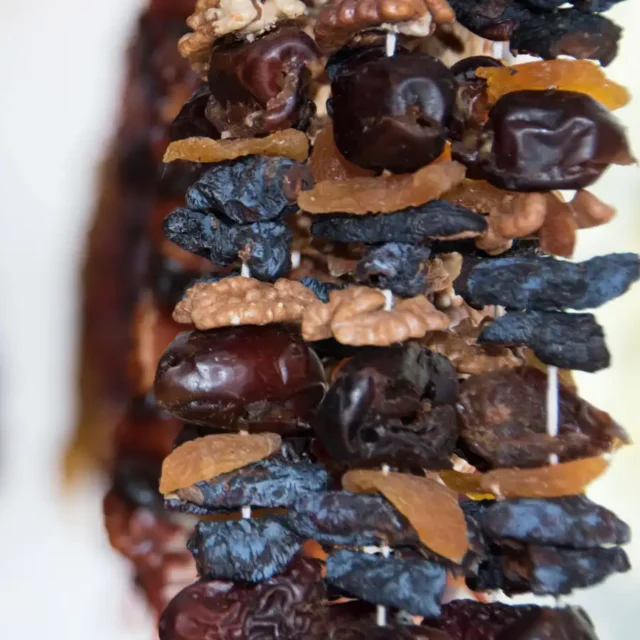
The result is a dense sweet that isn’t overly sugary, with an outer layer that vaguely resembles chocolate in texture and a crunchy nut-filled center.
The region with the longest tradition in its production is Kakheti, In the east of the country, which is also Georgia's main wine-producing region, churchkhela is a popular souvenir. It makes sense: it originated as a way to use up leftover grape must from winemaking and to preserve autumn nuts in a portable format. For centuries, it was an energy-rich food carried by Georgian warriors on campaign. Today, it's one of the country's most popular souvenirs.

It’s worth knowing that churchkhela isn’t uniquely Georgian—you’ll also find it across the Caucasus, as well as in Turkey, Greece, and Cyprus, with slight variations in name and recipe.
👍 My two cents: avoid buying it in the most touristy areas of Tbilisi, where prices can be three or four times higher than normal.
And if you want to see how it’s made and better understand the culture behind it, this day trip to Kakheti with a winery visit and wine tasting is a great way to combine both experiences in one day.
🔹 Where to buy it
The best place to buy churchkhela is at local markets, where locals shop.
🔹 Typical price
Between 1.5 and 3 lari per piece, depending on size and ingredients.
⭐ Related article: Best Markets in Tbilisi: Complete Guide and
Typical Drinks of Georgia
Georgia isn’t just a country of great food. It’s also a country of excellent drinks, where beverages are not just a side note but an essential part of the dining experience.
13. Georgian Wine
Georgian wine is not a recent trend or a fashionable product. Georgia is considered the cradle of wine, with a winemaking tradition that dates back over 8,000 years, making it the oldest known wine-producing region in the world.
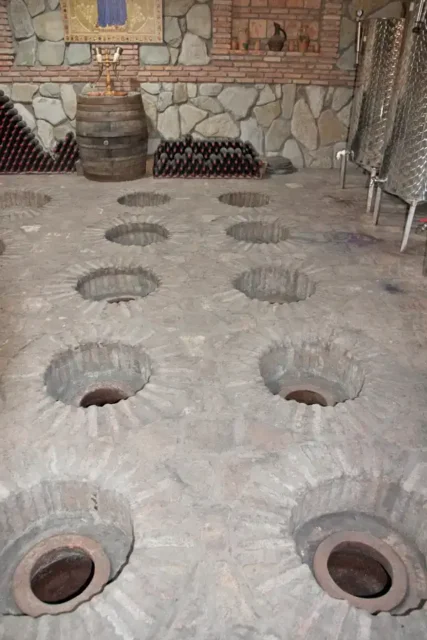
This ancient method has been recognized by UNESCO as Intangible Cultural Heritage of Humanity and is still used in many wineries across the country.
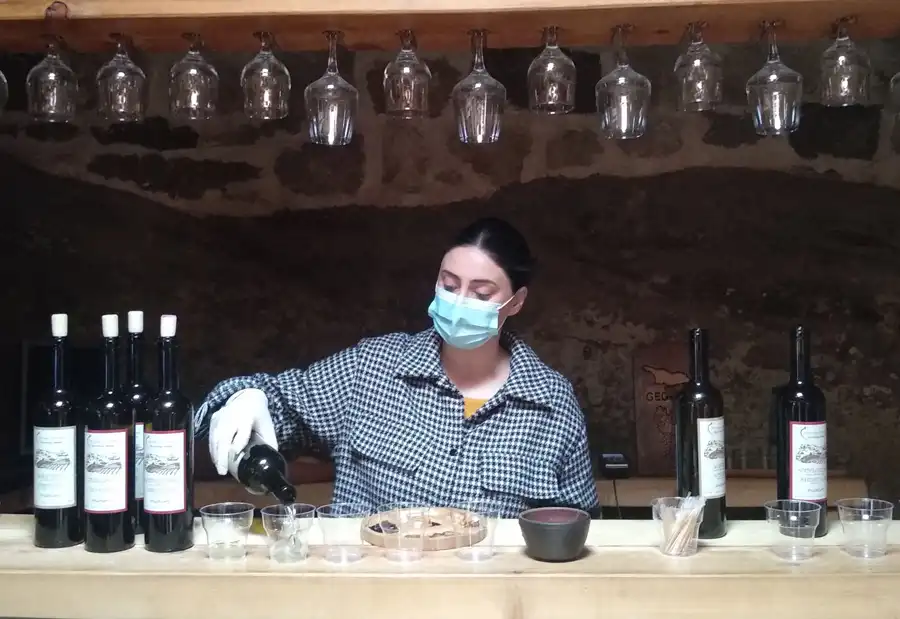
The technique uses clay vessels called qvevri, which are buried underground. Grapes, along with their skins, seeds, and sometimes stems, ferment for months. The result is what’s known as natural or amber wine, with a distinctive orange color and a flavor profile very different from conventional wines: more tannic, more complex, and with a texture that surprises you the first time you try it.
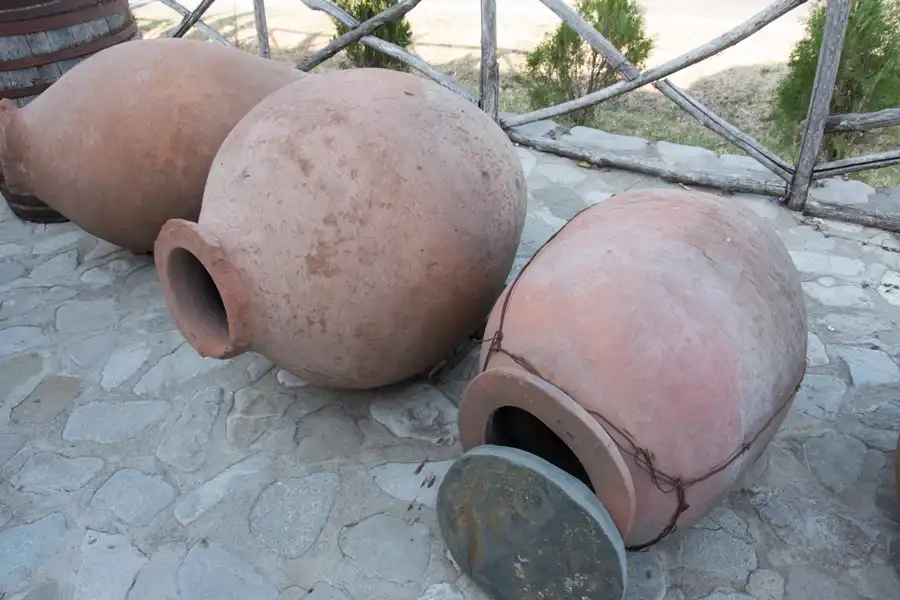
Coming from Western European wines like those from Spain or France, I’ve always preferred whites, and I have to admit Georgian red wines pleasantly surprised me. They have a smooth, elegant flavor that’s really enjoyable.
The Kakheti region is Georgia’s main wine-producing area. It’s home to some of the best-known native grape varieties, such as Rkatsiteli and Saperavi, which you’ll rarely find outside the Caucasus.
🔹 Where to try it in Tbilisi and beyond
You’ll find good wine in most Georgian restaurants and bars, but if you want a more in-depth experience, I recommend:
- 8000 Vintages (Tbilisi): They have several locations, specialize in wine, and offer excellent tasting boards to pair with it. It’s also a great place to pick up a bottle to take home.
- Kakheti: If you love wine, don’t miss visiting this wine region of Georgia. This tour is very complete, including winery tastings and other cultural stops.
🔹 Typical price
A glass in a restaurant costs between 3 and 8 lari, depending on the place and variety. A bottle in a shop or market can start from around 15 lari for young wines, while higher-quality or traditionally made qvevri wines can exceed 50 lari.
14. Chacha
Chacha is Georgia’s traditional grape spirit, made from the leftovers of the winemaking process: the grape skins, seeds, and stems that remain after the wine has been produced. It’s the local equivalent of Italian grappa, although it has a character all its own.
It has a high alcohol content, usually between 40% and 60%, and homemade versions can easily be even stronger. It's typically enjoyed as a digestif after a meal, although during Georgian celebrations it can make an appearance at almost any point in the evening.
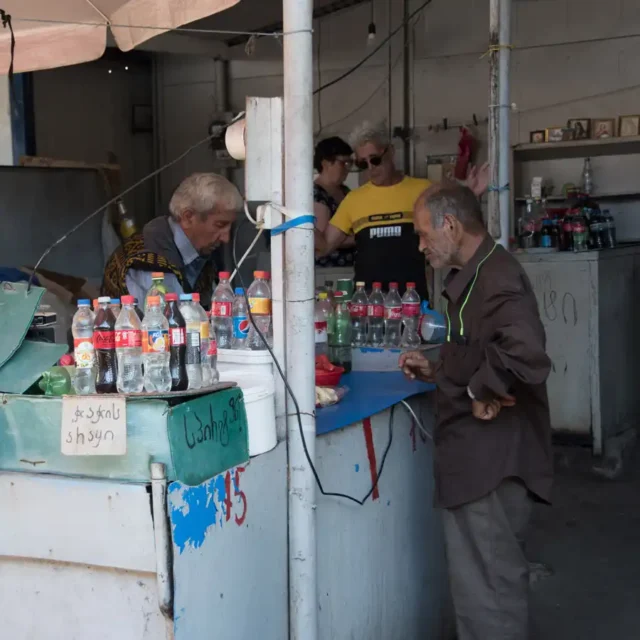
If someone offers you homemade chacha, accept it with both appreciation and caution. It's an important gesture of hospitality in Georgian culture, but it's worth knowing what you're getting yourself into.
🔹 Where to try it in Tbilisi
You'll find chacha in almost every Georgian restaurant or bar, and it's often included in wine tastings in Kakheti. In Tbilisi, there's also a bar dedicated to it:
- Chacha Corner: A small bar with an impressive selection of chacha, where they're usually happy to explain its history and how it's made.
🔹 Typical price
A glass at a restaurant usually costs between 3 and 6 lari. If you'd like to take a bottle home, expect to pay between 20 and 40 lari, depending on the brand and alcohol content.
15. Georgian Lemonades
Georgian lemonades were one of the biggest surprises for me, and they're a true local classic. They're nothing like what most people think of as lemonade. Instead, they're sweet, sparkling soft drinks with bold flavors and instantly recognizable thanks to their bright colors.

The most popular brand is Natakhtari, which dates back to the Soviet era and remains the country's go-to choice today. The most common flavors are pear, tarragon, lemon, and tkemali, made from the same tart plum that's widely used in Georgian cooking.
You'll find them in almost every restaurant, café, and shop across the country. They're a refreshing alternative if you don't drink alcohol and pair particularly well with more heavily seasoned dishes. And if you're looking for an unusual souvenir, a bottle of Natakhtari doesn't take up much space and makes a fun one to bring home.
🔹 Where to try or buy them in Tbilisi
They're served in almost every restaurant and bar, and you can also buy them in supermarkets.
🔹 Typical price
A bottle at a restaurant costs between 3 and 5 lari. In supermarkets or neighborhood shops, you'll usually find them for under 2 lari.
Food Experiences in Georgia
Trying traditional Georgian food in restaurants is an essential part of any trip, but if you really want to understand the local cuisine, I'd recommend taking it one step further.
Georgia's food culture is deeply rooted in family, hospitality, and tradition. That's why some of the best culinary experiences aren't just about eating—they're about discovering how the dishes are prepared, meeting the people who cook them, and learning the stories behind each recipe.
Here are a few food experiences I'd recommend:
1. Supra (Traditional Georgian Feast)
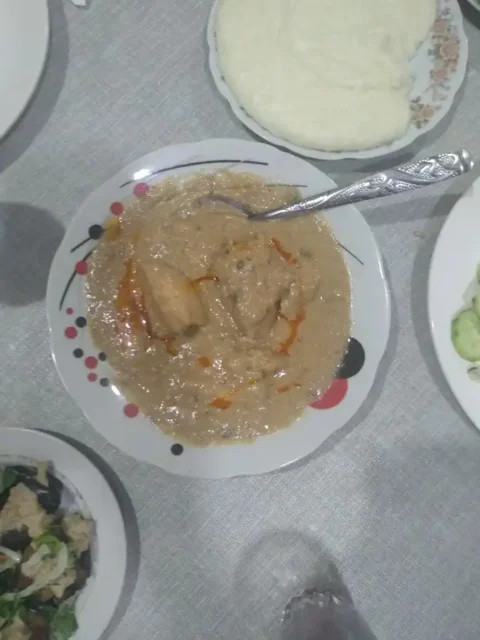
A supra is Georgia's ultimate culinary celebration: a long table filled with traditional dishes, plenty of wine, and a series of toasts led by the tamada, the toastmaster and master of ceremonies.
I recommend this supra, which also includes traditional folk dancing. It's one of those experiences you'll remember long after your trip to Georgia.
2. Cooking Class
If you want to bring home more than just photos, a cooking class is the perfect choice. This cooking class is excellent and teaches you how to prepare some of Georgia's most iconic dishes, including khinkali and khachapuri.
3. Visit Kakheti
Kakheti is Georgia's most important wine region and the best place to understand the deep connection between Georgians and their wine. This is the same tour I mentioned earlier: you'll visit a traditional winery with qvevri, enjoy a wine tasting, and explore several other fascinating places around the region.
4. Tbilisi Food Tour
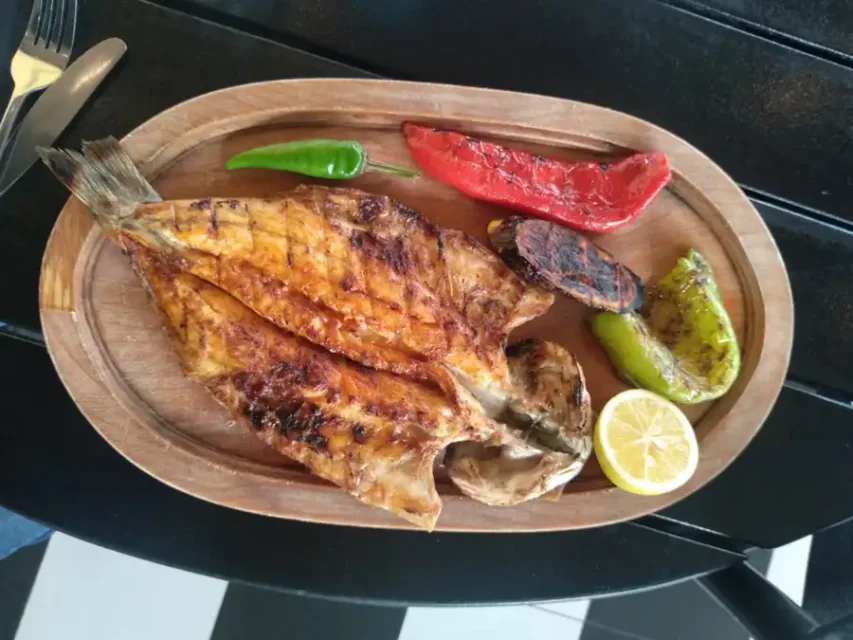
This food tour is perfect if you've just arrived and want a great introduction to Georgian cuisine in just a few hours. It includes nine traditional dishes, Georgian wine, and chacha, all led by a local guide who explains the cultural background behind everything you taste.
Tips for Eating in Georgia
1. Portion Sizes
The portions are generous—more generous than they seem when you read the menu. If you're traveling with someone, ordering several dishes to share is a great idea. It also fits perfectly with the local culture, where meals are meant to be shared around the table
2. Bread
Freshly baked bread deserves a stop of its own. Traditional bakeries that make shotis puri are usually tiny, unassuming places, but the bread that comes straight out of those clay ovens is on a completely different level from what you'll get in most restaurants. If you spot one, go in.
3. Khinkali
Some restaurants have a minimum order per khinkali filling. The most common requirement is five dumplings of each variety, although some places lower that to three. If you'd like to try several fillings without leaving completely stuffed, look for restaurants that let you order them individually, such as Cafe Daphna.
4. Regional Cuisine
Ask about regional specialties. The standard menu at a tourist-oriented restaurant in Tbilisi doesn't always reflect the incredible regional diversity of Georgian cuisine. If you're curious about dishes from a particular area, it's well worth asking or seeking out restaurants that specialize in that region.
5. Prices
Georgia is a very affordable destination for food. At a traditional restaurant, you can enjoy an excellent meal for around 20 to 35 lari per person, including a drink. Markets and bakeries are even cheaper. Compared with Western Europe, the difference is quite noticeable.
6. Churchkhela
Avoid buying churchkhela in touristy areas. Prices can easily be three or four times higher than at local markets, without any improvement in quality. Markets are always the best place to buy this sweet treat.
7. Cilantro
Cilantro is everywhere. If you don't like it, mention it when ordering, as it's a very common ingredient in stews, soups, salads, and even as a garnish. It isn't always listed on the menu, but chances are you'll find it on your plate.
FAQs
1. What is the most famous dish in Georgia?
Khachapuri is probably Georgia's best-known dish internationally, but within the country, khinkali are just as popular—if not more so. If you could only choose two dishes to understand Georgian cuisine, those would be the perfect place to start.
2. Is Georgian food spicy?
Generally, no.
Although some regions use more spices than others—especially Samegrelo—Georgian cuisine is usually more aromatic than spicy.
You'll find plenty of fresh herbs, garlic, walnuts, and spice blends that add lots of flavor without overwhelming heat.
3. Are there vegetarian options in Georgia?
More than you might expect. Pkhali, badrijani, lobio, khachapuri, and several varieties of khinkali are completely vegetarian. Georgian cuisine makes extensive use of vegetables, legumes, and nuts, so you won't have any trouble finding meat-free dishes.
In fact, one of the things that surprised me most during the year I lived in Georgia was just how many meat-free options I found in traditional restaurants.
Final Thoughts
Georgian food was one of the biggest surprises I came across while traveling through the Caucasus.
Before visiting the country, I barely knew anything beyond khinkali and khachapuri. But the more I explored Georgia, the more I realized that its cuisine is far more diverse than it first appears.
Every region has something different to offer. Some are known for their cheeses and breads, others for their wine, spices, or aromatic herbs. That diversity makes eating your way through Georgia an experience in itself.
My advice is to use your trip as an excuse to step outside your culinary comfort zone. Try dishes you can't pronounce, stop by traditional bakeries, explore local markets, and, if you get the chance, share a meal with Georgians.
Some of my favorite memories from the country came exactly that way—simply sitting down and ordering something I hadn't planned to try.
I’ll leave you with a quote:
«Traveling is tasting the world, one dish at a time.»
If you have any questions, leave me a comment below and I'll help you as much as I can. If you found the article useful, share it with other travelers. Have a good trip! 😘
More about Georgia



Hi, I’m Andrea, creator and author of Viajeros Activos (Active Travelers). I write about Southeast Asia, the Caucasus, and Europe. I’m a full-time traveler, passionate about good food, and always looking for new adventures.